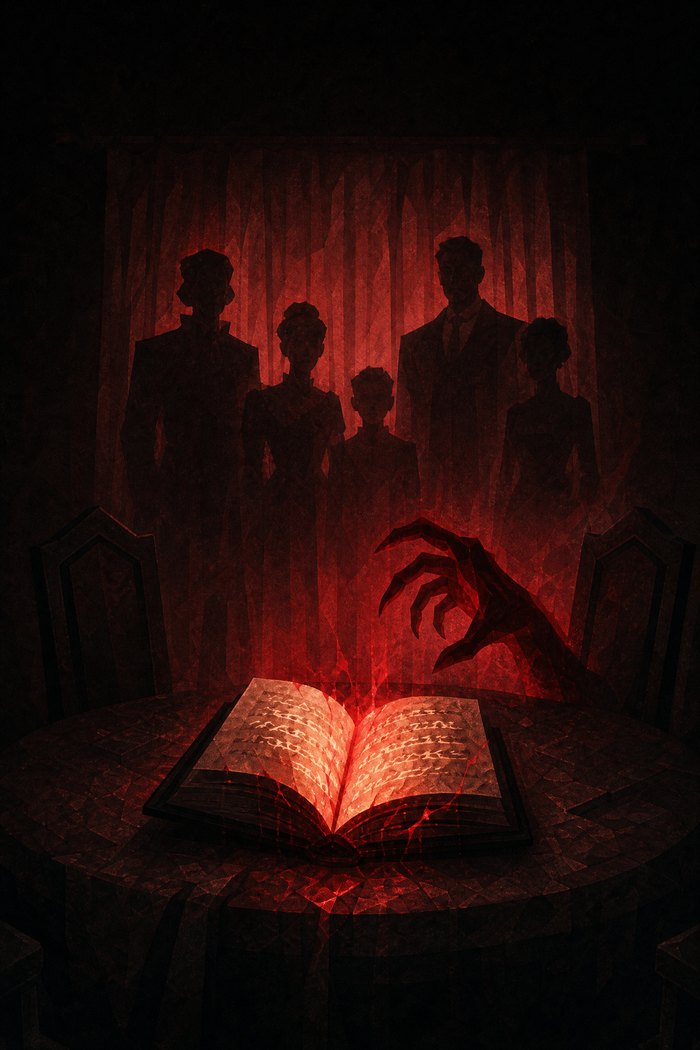
The Notebook (Part 1)
My family has old money. Four generations. The family office manages two hundred forty million dollars. The estate in Greenwich has twelve bedrooms, a tennis court, and a private dock. You would think people like this would value competence. They never valued me.
I am the middle child. My older brother, Pierce, runs the real estate division. My younger sister, Camilla, sits on two nonprofit boards and married a tech founder. I have a degree in applied mathematics from MIT. I graduated at nineteen. I work as a data analyst for a mid‑size hedge fund. My family says I lack ambition.
Being the middle child means you get forgotten. Pierce is the heir. Camilla is the darling. I got hand‑me‑downs even when I was thirty‑two. My mother, Eleanor, tells guests I am "independent." She means it as a dismissal.
At dinners I speak slowly. I ask questions I already know the answers to. I laugh at jokes that are not funny. I spill wine twice in one year. Pierce claps me on the back and calls me "the absent‑minded professor." Camilla does not include me in family photos for the annual newsletter.
I keep a notebook. It is black, spiral‑bound, the kind you buy at a drugstore. I write down every asset, every trust, every loan. I note who controls what. I track dates. I track signatures. I have done this for three years.
I did not start the notebook to be strategic. I started it because I was afraid.
The first entry was about my father's will. I found a draft on his desk when I was twenty‑nine. He had left me a fixed sum of five hundred thousand dollars. Pierce got the real estate portfolio. Camilla got the foundation and the Greenwich house. I asked my father about it at dinner. He laughed. He said I would probably lose the money in some tech scheme anyway. I laughed too.
That night I wrote down the numbers. I wrote down what I thought I deserved. The numbers did not match. I kept writing.
The notebook began to change after the first year. I would open it and find entries I did not remember writing. They were in my handwriting. They contained details I had not researched. Dates of board meetings. Names of offshore accounts. A property manager in Miami who was committing fraud. I did not know about the fraud until I saw it in the notebook.
I thought I was sleepwalking. I set up a camera in my apartment. The footage showed me sitting at my desk at three in the morning. My eyes were open. My hand moved across the page. My face had no expression.
I did not stop using the notebook. I told myself it was useful.
The property manager in Miami was real. I checked the fraud case. It was filed in county court three weeks before I wrote it down. I had no way of knowing about it. I did not read legal filings. I did not know the manager's name. But the notebook knew.
I began to test it. I would ask a question in my head before I opened it. What is Pierce hiding? I opened the notebook. A new entry listed a shell company in Delaware. I checked public records. The shell company existed. Pierce was the sole director. He had used it to buy a vacation home in Aspen with family funds.
I did not confront him. I added the shell company to my list.
The notebook started giving me instructions. They appeared as simple sentences at the bottom of a page. "Let him take the loan." "Wait until the stroke." "Do not warn them." I followed the instructions. I told myself I was in control.
I was not in control.
The worst part is not what I did. The worst part is what the notebook made me enjoy.
When the hospitality fund lost seventeen million dollars, I felt nothing. When Camilla's donor list leaked and she lost her board seats, I felt calm. When my father signed over his voting rights in the hospital, I watched his hand move across the paper. I felt satisfied. I wrote it down in the notebook later that night. The notebook wrote back.
At the bottom of the page, in my own handwriting, it said: "Next is the foundation."
I put the notebook in a safe deposit box the next morning. I did not open it for three weeks.
Then I started hearing it.
Not a voice. A pressure behind my eyes when I thought about the family. A sense of knowing exactly what would happen next. I went to the bank. I opened the box. I took out the notebook.
The pages were filled. Every line was full. I had not written any of it. The entries covered the next six months. The dates. The conversations. The exact language Camilla would use when I offered her the spreadsheet. The hospital room where my father would sit. The price the grocery chain would pay for the strip mall lease.
I turned to the last page. It had a single sentence.
"When you have everything, you will give it to me."
I closed the notebook. I put it back in the safe deposit box. I have not opened it since.
That was two months ago. I still know things I should not know. I know what Pierce will say tomorrow. I know Camilla is planning to contest the new operating agreement. I know my mother will cry again at dinner.
I do not need the notebook anymore. It is inside my head now.
I am writing this because I want someone to know. I am not the one who took control of my family. The notebook did. I was just the hand that held the pen.
Tomorrow I am going to the bank. I am going to destroy it.
But I already know I will not. I know because I have seen the next page. It is already written. It says I will keep it. It says I will need it for what comes next.
If you have a notebook like this, do not write in it. Do not keep it. Do not ask it questions.
It answers.