Back to all stories
THE GREY ROOM

THE GREY ROOM

THE GREY ROOM

completed15 Episodes44 min read to read
TerrifyingYou might scream
HorrorPsychologicalThriller

At six years old he was walked through a door without a sign, and given a number instead of a name. Specimen Thirteen. Raised in a facility called the Grey Room — trained to be a weapon, taught that fear is inefficient and pain is information — he was never taught to be loyal. Years later, when the black car takes Hana, he goes back. A psychological horror thriller about the price of being made useful. The complete expanded designer edition, including the new chapter: The Man Who Named the Room.

Share:

The Designer Edition

The complete expanded edition — every chapter, beautifully typeset.

$2.99Buy Now

All Episodes

15 Episodes

Quick Jump by Section

Prologue: 1
Main Story: 13
Epilogue: 1
Episode 13 min read

Prologue: No Colours

Share:

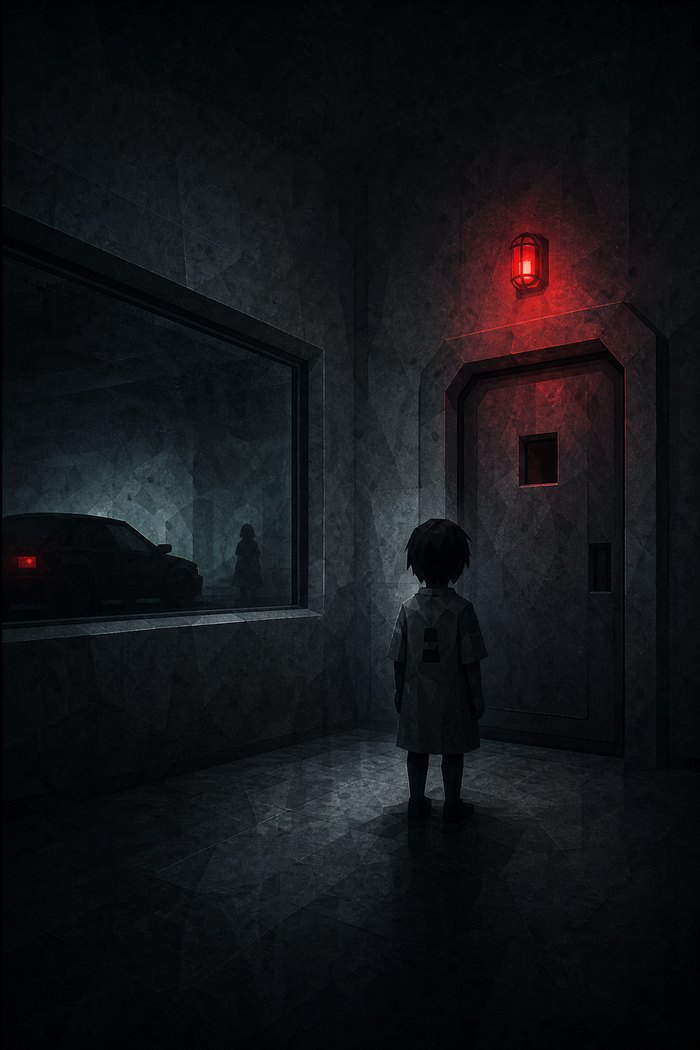
The first thing they took from me was colour. I was six years old when my parents walked me through a door without a sign. I remember my mother’s hand around mine. I remember that she had painted her nails blue, a soft blue like the sky I used to see from the balcony of our apartment. Then the door closed. After that, there was only grey. Grey walls. Grey floor. Grey lights behind frosted plastic. Grey uniforms that made every child look like a small ghost waiting to be counted. Even the food had been drained of colour: pale rice, pale broth, pale vegetables cut into exact squares. The people in white coats never called it a prison. They called it the Grey Room.

“A laboratory for human potential,” Dr. Okada said on my first day.

He stood before a row of children in a room without windows. His voice was quiet. That made it worse. Loud people wanted something from you. Quiet people already believed they had it. “You will learn what ordinary children are never taught,” he said. “You will learn that fear is inefficient. Pain is information. Emotion is noise.” I had asked where my parents were. Nobody answered. There was a boy beside me named Jun. His lips were blue from crying. He kept asking for his older sister. The guard behind him pressed two fingers into the back of his neck until Jun fell silent. That was the first lesson. The second lesson came when they gave us numbers. I became Thirteen.

At night, I would press my ear against the cold wall between my cell and Jun’s. He tapped messages in a code we invented from the sounds of the pipes. Are you awake? Yes. Do you remember the sun? I did. I remembered the blue nails. The bright orange fruit in the bowl on our kitchen table. The red plastic car I had dragged across the floor until one wheel fell off. But memory was dangerous in the Grey Room. The doctors called it attachment. Attachment made people hesitate. Hesitation was corrected. So I told Jun I did not remember. He was quiet for a long time. Then he tapped, I will remember for both of us. The next morning, his bed was empty. No one said where he had gone. They stripped his mattress, wiped the wall, and placed a new child in the room before dinner. The new child never spoke. Her number was Twenty-One. She had a bruise shaped like a hand around one wrist. That night, I found a tiny sliver of yellow under my mattress. It was the torn corner of a sweet wrapper, probably stuck to Jun’s clothes when they took him away. I hid it in my mouth until the guards stopped counting us. Then I swallowed it. I wanted one piece of colour inside me where nobody could take it.

Episode 26 min read

Specimen Thirteen

Share:

They trained us in rooms built for repetition. There was a mathematics room with no chalkboard, only screens that showed problems until you solved them. There was a language room where we learned to read expressions before we learned to read books. There was a combat room with padded walls and a drain in the middle of the floor. There was a medical room where they taught us the names of bones by showing us X-rays of our own fractures. The doctors said they were making us capable. The guards said they were making us useful. The older children said nothing at all. I learned early that silence had different meanings. It could mean obedience. It could mean terror. It could mean a plan growing behind the eyes. By nine, I could calculate faster than most adults. By ten, I could identify a liar by the delay between a question and an answer. By eleven, I knew exactly how long I could hold my breath before black spots appeared at the edge of my vision. Dr. Okada was proud of that. He liked to stand outside the exercise room with a clipboard and say, “Again.” Again when our knuckles split against the bags. Again when our legs shook. Again when one of us fell and the room went blurry. They taught us Muay Thai, wrestling, lock-picking, surveillance, basic coding, financial systems, and the quiet geography of fear. But the Grey Room did not create strength. It created children who no longer believed anybody would come for them. That difference mattered. At twelve, I was assigned to a new group. Twenty-One was there. Her name was Mira, though we were not supposed to use names. She had survived longer than most. Her hair had been cut unevenly by someone who did not care if it looked cruel. On the first day, she looked at me and said, “You are the boy who listens to walls.” “I do not listen anymore,” I said.

“Then you are worse off than I thought.” Mira had a way of saying things like she was not afraid of the answer. I hated her for that at first. Then I started saving half my bread for her when the guards were not looking. She drew maps on the inside of her arm with a broken pencil tip. Corridors. Doors. Shift changes. The cameras that turned left before they turned right. “You are planning something,” I told her. “I am remembering something,” she said. “What?” “That there has to be an outside.” We were both punished for talking. We were made to kneel under the lights with our hands raised until our shoulders locked. Mira never cried. Neither did I. Later, in the sleeping wing, she whispered through the gap beneath the door. “They will notice you soon.” “Why?” “Because you keep passing their tests.” “Is that bad?” “It means they will want to see what happens when they push harder.” She was right. At thirteen, the doctors changed the word they used for me. I was no longer promising. I was high-risk. They began removing me from the group. Private assessments. Longer interviews. A man from the board visited twice. He had a silver watch and a smile that never reached his eyes. He asked whether I remembered my family. “No,” I said. “Good,” he replied. “That makes you more adaptable.” The day they tried to terminate me began like any other. Rice. Broth. Counting. Grey shoes in a grey line. But Dr. Okada came himself. “Thirteen,” he said. “Medical examination.”

I followed him because that was what I had been trained to do. The corridor lights flickered once. I watched the camera in the corner rotate away. I counted the guard’s steps. I noticed that Dr. Okada was walking too quickly. Fear was information. They brought me to an examination room where the drain had been cleaned. A woman I had never seen before held a syringe. On the tray beside her was a stack of forms. One page had my number. Another had a word stamped across the top in red. TERMINATION. My body moved before my thoughts did. I did not become a monster that day. I became a child who understood that nobody else was coming. When the guard grabbed my arm, I drove a ballpoint pen into the space beneath his collarbone. I twisted away. The second guard reached for his radio. I shoved the metal tray between us and ran. Alarms began only after I reached the service corridor. I knew the building because Mira had mapped it, because Jun had taught me to listen, because every punishment had given me another detail to keep. I ran past the laundry room. Down a stairwell. Through a door that opened with a code I had seen a nurse use three days earlier. The outside air hit my face like an insult. It was raining. Real rain. Cold and loud and full of movement. The sky above the forest was black, but the lights from the road made puddles shine gold. I stood there for one second too long. Then I ran. I ran until the Grey Room was a rumour behind the trees. I ran until the road became a town, the town became a train station, and my feet were bleeding inside shoes I had stolen from a delivery truck. I ran for a year. I slept in stairwells, abandoned storage units, and once under the counter of a closed noodle shop. I learned which shelters asked questions and which did not. I learned that money could be made from work nobody important noticed: fixing cheap phones, translating documents, finding mistakes in small companies’ spreadsheets. Eventually I built a name out of pieces that did not belong to me. Kai Mori.

A normal name. A normal boy. A normal student who arrived at school with his uniform pressed and his face carefully blank. The trick was not pretending I had never been in the Grey Room. The trick was pretending the Grey Room had not followed me out.
Episode 34 min read

The Paper Garden

Share:

Normal school was louder than the Grey Room. The corridors rang with lockers, shoes, laughter, arguments, music leaking from phones. At first, the noise made me want to find a corner and catalogue every exit. Then I learned how to sit inside it. I sat in the second row by the window, even though windows were difficult. They showed too much sky. I kept my hands flat on the desk. I answered questions only when called on. When the boys in the back shoved me in the hallway, I let them. When teachers asked why I flinched at fire alarms, I said I had sensitive hearing. I became forgettable by design. Then Hana Takahashi transferred into our class. She arrived late on a Tuesday carrying a bag that looked too heavy for her. She bowed to the teacher, said her name in a quiet voice, and took the empty desk beside mine. She had ink on the side of her thumb. That was the first thing I noticed. The second was that she did not ask why I had a scar behind my ear or why I looked at every new person’s hands before I looked at their face. At lunch, she pulled a small sketchbook from her bag. She did not draw people. She drew plants growing through strange places: a sunflower from the crack in a pavement, vines wrapped around an old radio, a whole garden climbing out of a rusted vending machine. After a week, she left a wrapped lemon candy on my desk. I stared at it for the entire lesson. “You can eat it,” she said without looking up from her notebook. “Why did you leave it there?” “Because you look tired.” It was such a small sentence that I did not know what to do with it.

In the Grey Room, kindness was always a test. If you accepted it, someone wrote down how quickly you trusted. If you refused it, someone wrote down how resistant you were. But Hana did not have a clipboard. She had an eraser with a bite mark in it and a pencil tucked behind her ear. I put the candy in my pocket. The next day, there was a drawing under it. A cat stood on a rooftop beneath a full moon, looking deeply offended by the world. “What is this?” I asked. “A cat,” Hana said. “I know that.” “Then you answered your own question.” I did not smile. Not then. But that night, in my apartment, I placed the drawing in the black notebook I kept under my bed. The notebook had followed me from the Grey Room. It was blank except for one sentence I had written after my escape:

Survival is not the same as living.

I tucked the cat behind that page. Hana became part of my schedule in ways I did not admit to myself. I learned the sound of her footsteps in the corridor. I noticed that she tapped three times against her desk when she was thinking. I learned that she hated bananas but loved cheap convenience-store coffee. I learned that she carried extra pencils because somebody was always forgetting one. She never asked me to explain myself. That made her dangerous. One afternoon, rain trapped half the class inside. Hana sat beside the window and sketched the drops running down the glass. “What are you drawing?” I asked. “A place that does not exist yet.” “What place?” She turned the sketchbook toward me. It showed a small room with bright walls, books everywhere, and plants hanging from the ceiling. There was a wide window with sunlight pouring through it.

“You cannot put that many plants in one room,” I said. “Why not?” “They will not get enough light.” She looked at me for a moment, then smiled. “Then we make a bigger window.” The word we stayed with me longer than it should have. For two months, I allowed myself to believe I could be a person instead of a calculation. I bought new shoes. I repaired the broken heater in my apartment. I learned how to cook rice without measuring every grain. Hana did not fix me. She did something more frightening. She made me want to be fixable. That was why the betrayal worked. Because I had finally given it somewhere to land.

Episode 43 min read

The Bet

Share:

Hana asked me to meet her behind the gym after school. Her message was folded twice and pushed under my pencil case. Can we talk? Please come alone. I read it three times. The handwriting shook slightly. I told myself it meant nothing. I told myself I was not waiting for anything. At 4:10, I walked behind the gym. The basketball court was empty. Wind dragged dry leaves along the fence. Hana stood near the concrete wall with her arms folded tightly across her chest. She was not alone. Three boys from the baseball team were standing behind her. Takeda was in the middle. Broad shoulders. Expensive shoes. His father’s company had donated new equipment to the school, which meant teachers pretended not to see the way he treated people. I stopped six steps away. “Why are they here?” I asked Hana. She looked at the ground. Takeda laughed softly. “He talks.” I did not look at him. “Hana?” Her mouth opened. No sound came out. Takeda stepped forward. “It was a bet. Two thousand yen. She wanted to see if she could make the weird kid smile.” For one second, the world became very quiet. Not Grey Room quiet. That silence had always been forced on me. This was different. This was the sound of something I had built badly collapsing in my hands.

Hana’s fingers curled around the sleeve of her sweater. “Kai, I—” “Was it true?” I asked. She looked at me then. Her eyes were wet, but I had been taught not to trust tears. “I did not know it would—” “That was not the question.” Takeda shoved my shoulder. “Do not make her cry, psycho.” My body knew fifty-three ways to hurt him before he could take another breath. Instead, I let the force move me half a step. He pushed me again. “You have nothing,” he said. I looked at Hana one last time. I wanted her to say it was a lie. I wanted her to say she had left the cat drawing because she had wanted to, not because someone had paid her to make a wounded boy believe in light. She said nothing. So I walked away. That night I sat on the floor of my apartment with the lights off. The city outside pressed blue and red reflections through the blinds. I opened the black notebook. I wrote one line.

Emotions are a bug. I have been patched.

Then I crossed it out. The pen shook in my hand. The Grey Room had taught me that pain was information. I had believed that meant pain could be managed, counted, reduced to a pattern. But the worst pain was not a broken bone or an empty cell. It was realizing that another person could see the part of you that wanted to live and decide it was worth two thousand yen.

I did not sleep. By dawn, I had made a plan. Not for revenge. That was what I told myself. For control. There was a difference. Or there had to be.

Episode 53 min read

Quiet Accounts

Share:

I had escaped the Grey Room with no money, no records, and no adult who wanted to protect me. That meant I had learned very early that systems were just rooms with more doors. Over the next four months, I built small things that talked to each other. A price-tracking script that found mistakes in online listings. A bookkeeping service that corrected invoices for companies too small to hire accountants. A simple market-analysis tool that warned shop owners when a supplier was overcharging them. None of it was glamorous. Most of it was boring. Boring was safe. The Grey Room had taught me to look for leverage. Outside, leverage looked like data, timing, and the people who assumed nobody was paying attention. By the first month, I had enough to pay rent without worrying about the meter running. By the second, I hired remote assistants to answer support emails and test software. By the fourth, the number on my private dashboard had climbed to thirty-two thousand a month. I did not feel rich. I felt less trapped. I kept going to school. Hana moved her desk to the other side of the room. She did not speak to me. Sometimes I caught her watching me with the expression people wore at funerals. I looked away first. Takeda found me by the lockers one Thursday. “You are still pretending nothing happened,” he said. I closed my locker carefully. “I am not pretending.” He pushed me against the metal. The sound echoed down the hall. “You think you are better than us because you have that creepy stare?” I let him hold me there for three seconds. Then I said, “Your father’s construction company is twenty-two days from bankruptcy.”

Takeda blinked. “The loan is held through three shell companies. The last one changed hands this morning. Your father thinks he owes Kuroda. He does not. He owes the company I control.” His grip loosened. “You are lying.” I held up my phone. It showed a document with a signature, a date, and a number he recognized. “I do not own your family,” I said. “I own a debt your father made when he thought nobody was looking. There is a difference. He can pay it. He can sell an asset. He can ask for help. But if you touch me again, I will stop being patient about the timetable.” The threat was not the important part. The important part was that I watched fear change his face. I hated how familiar it felt. Takeda stepped back. “What do you want?” “Nothing from you.” That was the truth, though I did not understand it until later. I did not want his house, his money, or his apology. I wanted to know that nobody could ever make me small again. He walked away. The next day, his seat was empty. Hana did not ask me what had happened. She only left a folded piece of paper on my desk before the first bell. Inside was a drawing of the same cat from before. This time it stood in front of an open door. Underneath, she had written: I am sorry. I was scared. That does not excuse it. I put the drawing in my pocket. I did not forgive her. But I did not throw it away.

Three days later, she disappeared.

Episode 63 min read

The Black Car

Share:

The school security footage had no sound. I watched it in the vice-principal’s office while he explained, in a shaking voice, that the police had been called. Hana left through the east gate at 3:47. A black sedan stopped at the curb. The rear door opened. She hesitated. Then somebody pulled her inside. The car drove away before the camera could focus on the number plate. The vice-principal kept talking. He said words like abduction and procedure and wait for the authorities. I only watched the driver’s face. He turned toward the camera for less than half a second. That was enough. His name was Sato. In the Grey Room, he had overseen transport. Children entered buildings in his cars and did not always leave in them. For the first time in years, the part of me built in the Grey Room stopped hiding. I went home. I locked the door. I opened a hidden panel beneath the wardrobe and took out the file box I had sworn never to touch again. Inside were maps. Shift patterns. Names. Facility codes. A single photograph of a younger Dr. Okada shaking hands with a man whose face I had scratched out with a key. At the bottom was a hand-drawn layout of a building labelled 47. I had stolen it the week before I escaped. I did not know why. Maybe some part of me had always expected to return. The route from the school to Building 47 took just under two hours if the roads were clear. I could not call the police and explain how I knew where to look. I could not tell them Hana had been taken by a network that officially did not exist. So I worked the way the Grey Room had taught me.

I reviewed traffic cameras. I rebuilt the sedan’s route from petrol-station timestamps and toll readers. I checked construction permits, utility usage, waste contracts, and the small invisible records that made a building breathe. At 9:18 that night, the pattern stopped being a pattern. It became an address. Building 47 stood at the edge of an industrial park outside the city. No windows. Grey walls. Private security. On paper, it was a decommissioned records storage facility. On paper, I had been dead for seven years. I opened the black notebook and wrote a new line beneath the crossed-out one.

I am going back. Not to escape. To destroy the room that made me.

Then I closed the notebook, turned off the lights, and began to prepare.

Episode 73 min read

Building 47

Share:

The industrial park was almost empty at two in the morning. Rain had started again. It softened the light from the security lamps and blurred the distance between the warehouses. I parked far enough away that the engine noise would not matter, then walked the rest of the route with the layout folded against my chest. Building 47 looked smaller than it had in my memory. That was the first lie it told. The second was the sign by the gate: PRIVATE ARCHIVES — NO ENTRY. The perimeter had two guards. I watched them from behind a stack of shipping pallets until I understood their rhythm. One checked the north fence every ninety seconds. The other lingered beneath the loading-bay light because he hated the rain. People always carried their weaknesses with them. You only had to wait long enough to see the shape of them. I did not go to the front gate. I went through a drainage channel Mira had once drawn on the inside of her arm. The tunnel was narrow, ankle-deep with black water, and it smelled like rust. At the end, an old maintenance hatch led into the lower level. The lock had been replaced, but the frame had not. I worked the latch until it gave way. Inside, the air was too clean. Antiseptic. Bleach. Cold metal. My body remembered before my mind did. I was six again. I was thirteen. I was every age they had tried to turn into a number. Then I heard someone breathing on the other side of a door. Hana. I found the cell block exactly where the map said it would be. Most of the rooms were empty. In one, a middleaged man sat tied to a chair, blood dark on his sleeve. In another, a woman cried without looking up.

Hana was in the fourth cell. She was curled against the wall, wrists bound, her face dirty beneath the fluorescent lights. When the lock clicked, she looked up so sharply I thought she might scream. I put a finger to my lips. “Kai?” she whispered. “I am here.” Her eyes filled, but she did not cry. “How did you find me?” “Later.” I cut the binding. Her fingers were pale where the plastic had bitten into them. “Can you walk?” She nodded once. We had taken three steps toward the exit when every light in the corridor changed from white to red. No siren followed. A voice came through the speaker above us. “Kai,” Dr. Okada said. “You were always difficult to bury.” Hana went still beside me. “Come to the main office,” he continued. “Bring the girl. Do not run. You know we have more guards than you have bullets.” I looked at Hana. “I do not have bullets,” I said. The speaker clicked off. She stared at me. “That was not comforting.” For the first time since I had entered the building, I almost smiled. “Stay behind me,” I told her. “Do not stop walking.” The Grey Room had brought me home. It had forgotten I was not its child anymore.

Episode 85 min read

The Man Who Named the Room

Share:

Dr. Haruto Okada had once believed that kindness was the most dangerous lie adults told children. He was eight when his mother began leaving him alone in their apartment for days at a time. She always returned with apologies, small gifts, and a different promise: that next week would be better; that she was doing her best; that he was brave for understanding. The gifts were never what he wanted. A plastic robot. A packet of sweets. Once, a bright red scarf that was too large for him and smelled of rain and smoke. What he wanted was reliability. No one gave it to him. By thirteen, he had learned to cook rice, sign his mother’s name on school forms, and hide the empty bottles before the landlord came around. His teachers called him exceptional. They meant he had stopped asking for help in a way that made them uncomfortable. At seventeen, he won a scholarship into medicine. At twenty-four, he published a paper on childhood trauma that senior doctors praised for its clarity and lack of sentiment. He wrote that children adapted to adverse conditions more rapidly than adults imagined. He did not write that people were often proud of a child’s resilience only when it allowed them to ignore the harm done to that child. For a while, Okada wanted to help them. He worked in overwhelmed hospitals where frightened children arrived with bruises no one wanted to name. He listened to them describe houses where danger wore a familiar face. He watched caseworkers run out of time, beds, funding, patience. Then one winter, a girl named Emi died after being returned to a home everyone had agreed was “improving.” Okada attended the memorial because nobody else from the hospital did. He stood at the back of the chapel, listening to adults talk about tragedy as if it were weather. He watched the girl’s father cry in the front row. He watched people forgive him because grief looked convincing when it was public. That night, Okada wrote in a notebook for the first time in years.

Children are not protected by promises. They are protected by systems that do not fail.

It was a good sentence. It was also the beginning of everything that went wrong. The first board meeting took place in a private dining room above a bank. There were twelve people around the table: financiers, academics, politicians, and one man who did not introduce himself until the end. Kenji Mori. Mori spoke softly. He had the calm manners of someone who had never doubted that the world would arrange itself around his decisions. “What are you proposing?” he asked. Okada presented models. Developmental conditioning. Education without instability. Medical support. A controlled environment where vulnerable children could be protected from the failures of their homes and trained into independence. He did not use the word laboratory. Mori leaned back in his chair. “And what will these children become?” “Capable,” Okada said. Mori smiled. “Useful.” Okada should have walked away then. Instead, he accepted the funding. The first facility had white walls. Okada hated them. White suggested innocence. White made donors feel clean. He ordered the walls painted grey. Grey did not pretend. At first, the Grey Room was smaller than the monster it became. There were tutors. Nurses. Structured days. Real meals. The children were given books and clean beds. Okada told himself it was better than the homes they had been taken from. Then the board asked for results. The board always asked for results.

A child who flinched too often was classified as resistant. A child who fought back was classified as aggressive. A child who cried was classified as unstable. Every label produced a new intervention. Every intervention made the label more true. Okada learned to edit language until it could not cut him. Punishment became correction. Isolation became observation. Pain became information. Children became specimens. By the time Kai arrived, Okada was no longer sure he remembered the sound of his own conscience. He noticed only that Subject Thirteen watched people differently. The boy did not simply endure. He collected details. He stored them. He waited. Okada feared that kind of child. He also admired him. When Thirteen escaped, the board wanted the problem erased. Okada signed the termination authorization with a hand that did not shake. For years afterward, he told himself it was necessary. He told himself that a system could not survive if every exception became a weakness. But on the night the alarms turned red at Building 47, he sat alone in his office and opened the old notebook he had kept since Emi’s memorial. The first page still held the sentence he had written as a young doctor. Children are not protected by promises. They are protected by systems that do not fail. He read it while the cameras showed Kai moving through the corridors. For the first time, Okada understood what he had built. Not a system that never failed. A system that required children to fail so it could call itself necessary. Then he heard footsteps outside his office. He closed the notebook. He was still choosing the lie when the door opened.

Episode 93 min read

After the Sirens

Share:

Dr. Okada’s office had a window. That was what I noticed first. It was narrow and high, more decorative than useful, but it showed a strip of night sky beyond the industrial park. For a man who had spent his life building rooms without exits, it felt like a confession. Okada sat behind a steel desk. His hair was greyer than I remembered. His hands were clean. On the wall behind him hung certificates from institutions that had never known—or had chosen not to know—what he did underground. “You killed three of my men,” he said. “I am impressed.” “I did not come for your approval.” “You came because she mattered.” Hana stood behind me. Her breath was uneven, but she did not retreat. Okada turned his attention to her. “Your brother was a failed subject. A regretful expense.” Hana made a sound like the air had been knocked out of her. I caught her arm before she reached him. Okada smiled. “There. That is the flaw. Attachment.” “No,” I said. “It is the reason you lose.” What followed was quick. There were guards. There was a button beneath the desk. There was a moment when I could have made a permanent choice. Instead, I took his phone. I tied his hands with the plastic restraints he had used on children. I photographed every file on his desk. I sent the location, the photographs, and one sentence to three news desks, two child-protection offices, and the police. Look in the cells. When the sirens finally reached Building 47, Hana and I were already outside.

The rain had stopped. Dawn was a thin line behind the warehouses. Hana stood beside the road with a blanket around her shoulders. She had not let go of my sleeve since we left. “Why did you come?” she asked. The honest answer was too large. Because you were the first person who made me want a window. Because I hated you for a while, and then I hated myself for letting the hate be easier than grief. Because the Grey Room chose you to draw me out, and I would rather burn every corridor it had built than let it use you as a door. So I said, “Because I knew where they would take you.” Hana looked down at her hands. “I am sorry,” she said. “For the bet. For not stopping it. For all of it.” “I know.” “That is not forgiveness.” “No.” She nodded as if she had expected that. “But it is more than I deserve.” The police arrived. The doors opened. Children and adults emerged from the building one by one, blinking in the early light. For the first time, the Grey Room had to watch people walk out. I did not stay for the interviews. There were still eleven other facilities on the list. And somewhere beyond the rain, people who had once signed me away were learning that Thirteen had survived.

Episode 103 min read

The List

Share:

For three days, every screen in the city showed Building 47. The news called it a secret detention centre. Commentators argued about oversight failures, sealed records, and the shocking absence of a clear chain of command. Dr. Okada was shown entering a police vehicle with a jacket over his head. They did not show the children’s eyes. I understood why. Cameras did not know what to do with that kind of silence. Hana stayed in a safe house operated by a woman named Imani. Imani had once been a social worker, then a whistle-blower, then someone the Grey Room tried very hard to erase. She had an apartment building full of spare rooms and a rule that nobody had to explain their nightmares on the first night. I paid for Hana’s room through a legal foundation I created that morning. I did not tell her. Imani knew, of course. Imani knew everything she needed to know and little she did not. On the fourth night, I broke into Dr. Okada’s house before the police finished sealing it. His study looked ordinary. Books. A glass desk. A framed photograph of a coastline. That was the worst thing about men like him: they built normal lives around terrible rooms and expected the walls to protect them. I found the files inside a hidden drive compartment beneath the desk. Twelve facilities. Twelve directors. A board of twelve names. There were children listed as if they were inventory. Adults marked for retrieval. Expenses categorized under research, transport, behavioural correction. My own file sat near the top. Subject 13 — active. High risk. Termination failed. Do not engage without authorization. Hana’s brother was there too. Subject 22 — deceased. Disposal complete.

I read the line six times. Then I sat in Okada’s dark office and understood why rage could feel cold. Not hot. Not wild. Cold enough to preserve every detail. At the bottom of the list was a note written in Okada’s hand. Facility 6 is closing. Transfer the children before the inquiry widens. Contact Director Mori. Do not trust the girl. Do not underestimate 13. I copied the file and left before dawn. When I reached my apartment, Hana was waiting outside the building. She had found the foundation records. Or Imani had told her. Either way, she stood beneath the streetlamp with her hands shoved into the pockets of an oversized coat. “You paid for the safe house,” she said. “Yes.” “Why did you not tell me?” “Because you needed a place to sleep, not another debt.” Her expression changed at that. Not softened. Sharpened. “They killed my brother,” she said. “They used me to reach you. You do not get to decide I am too fragile to know what happens next.” “I am not deciding that.” “You are.” She stepped closer. “You are making every decision alone because that is what kept you alive. I understand that. But survival is not the only thing happening anymore.” I looked away. Hana held out her hand. “What is on the list?” I thought of Jun. Mira. The endless numbered rooms. The children who might still be waiting for someone to make a larger window. Then I gave her the drive.

She read in silence. When she finished, she did not cry. She looked at me and said, “We start with Facility 6.” For the first time since the raid, I did not say no.

Episode 113 min read

The Archive Beneath the Station

Share:

Facility 6 was in the suburbs, hidden behind the polished front of a private clinic. But finding it was not the same as reaching it. The board had started moving children, wiping drives, paying lawyers, and closing doors. We needed proof that could survive a courtroom. The files from Okada’s house contained an old reference number beside each child’s record. Imani recognized the format. “Rail authority archive,” she said. “Before the city rebuilt the central station, the underground service tunnels were used to store disaster records. The Grey Room piggybacked on the system.” At midnight, Hana and I took the last train into the city. The station was nearly empty. Security cameras watched the platforms, but the old maintenance stairwell was behind a locked door at the far end of the staff corridor. I picked it in eighteen seconds. Hana raised an eyebrow. “Eighteen?” she whispered. “The humidity made the pins stick.” “That is the least normal sentence I have ever heard.” “Noted.” Below the station, the air tasted of dust and iron. Rows of metal shelves disappeared into the darkness. Old paper files sat in boxes labelled with floods, fires, outbreaks, things that had once required a city to remember its dead. The Grey Room had hidden itself among them. Hana found the first document. It was a procurement list. Blankets. sedatives. transport restraints. Classroom materials. She held it with both hands, as if it were something contaminated. “They bought pencils,” she said. “They bought pencils for children they called specimens.”

I did not know what to say. Then we heard a door close somewhere deeper in the archive. Hana froze. “Someone followed us?” “Maybe.” I led her between the shelves, listening. The steps came closer. Careful. Not a guard. A person trying not to sound afraid. A woman emerged from the dark with a flashlight raised. She was older than Imani, perhaps fifty, with a silver braid down her back and a canvas bag at her side. “Do not run,” she said. “I am not here for you.” “Who are you?” Hana asked. “My name is Dr. Leila Voss. I used to audit the Grey Room’s funding.” I moved in front of Hana. “You used to?” Voss smiled without humour. “That is what I tell myself when I want to sleep. The truth is that I signed reports I did not read closely enough. Then I read one.” She reached into her bag and placed a binder on the floor. Inside were names. Board payments. Donations routed through charities, universities, private clinics, and construction companies. Institutions that looked clean from a distance. At the centre of it all was a name I had seen in Okada’s file but had not yet understood. Kenji Mori. Hana watched my face. “What is it?” I did not answer. Voss did. “He was one of the founders,” she said softly. “The board’s financial architect. He believed the Grey Room could create resilient people from damaged children.”

I knew the name. It was the name my forged school records had given me. Mori. A name I had chosen because I thought it belonged to nobody. The archive seemed to tilt around me. Kenji Mori was not nobody. He was the man who had signed the transfer form when I was six. My father.

Episode 123 min read

Small Weapons

Share:

I did not speak for the rest of the night. Hana did not force me to. We left the archive with copies of the funding files and a map to Facility 9. On the train home, she sat across from me with the folded documents on her knees. The carriage windows reflected us back in pieces. “You do not have to call him your father,” she said at last. “He signed me away.” “Yes.” “He built the system.” “Yes.” “He probably thinks he did something necessary.” Hana looked out at the black tunnel rushing past. “Then he is wrong.” The simplicity of it hurt more than pity would have. Over the next two weeks, we prepared. I taught Hana what the Grey Room had never taught me: how to leave. How to notice when fear was becoming a warning instead of a command. How to refuse a plan that made her feel like a tool. She insisted on learning practical things: how to use a burner phone, how to follow a route without being followed herself, how to apply pressure to a wound, how to look someone in the eye without letting them see every thought she had. But when I handed her a knife in the apartment one morning, she stared at it for a long time. “This is not a kitchen knife,” she said. “No.” “You expect me to use it?”

“I expect you to decide what you will not become.” She looked at me then. “That is not the same as deciding what I will do.” I nodded. “You are right.” It was difficult to say. Harder than any punch I had taken in the Grey Room. Imani arranged for us to meet another survivor in a diner outside the city. Her name was Rosa. She had been taken at fifteen and had escaped five years later by convincing a guard that she was already broken. “Facility 9 is different,” Rosa told us. “It is a training site. They do not just keep people there. They sort them. Move them.” “How many?” I asked. “Eight children when I last heard. Maybe more.” “What about the board?” Hana asked. Rosa pushed a sugar packet back and forth across the table. “They are consolidating. You hurt them at Building 47. They are scared now. Scared people destroy records.” “How long?” “Ten weeks, maybe less.” Eleven facilities remained. Twelve board members. One father I had not met. Hana took the knife from her bag and placed it on the table between us. “I will carry it,” she said. “But I will not become you.” I looked at the blade. Then I looked at her. “Good,” I said. And for the first time, I meant it.

Episode 135 min read

The First Cut

Share:

Facility 9 sat beyond an old logging road, deep in a forest that made every sound feel distant. We arrived at ten o’clock at night. The car was parked half a mile away. The plan was simple because complicated plans were usually just fear dressed as intelligence. Get inside. Find the children. Get them out. Leave proof behind. Hana wore black trousers, a rain jacket, and shoes with soft soles. The knife was hidden at her waist. She looked pale in the moonlight, but her hands were steady. “My heart is too loud,” she whispered as we reached the fence. “Good,” I said. “It means you are alive.” “You always say things like they are instructions.” “They are.” She gave me a look. I corrected myself. “They are also true.” The fence had one weak point behind a line of dead shrubs. I cut through it while the guard tower’s light swept away from us. We moved across the yard in the dark interval. Inside, the hallways were grey. Of course they were. For a moment, I could not breathe. The colourless walls reached backward through time. I saw the old rooms. The numbers. Jun’s empty bed. Hana touched my sleeve. “Stay here,” she whispered.

The words pulled me back. We found the cells in a row. The first child was a boy of seven asleep on a concrete slab without a blanket. I opened the door. He woke at the sound of the lock and flinched away from me. I put a finger to my lips. “You are leaving,” I said. He did not believe me. Then Hana crouched in front of him. “I am Hana,” she said softly. “You can hold my hand if you want.” The boy stared at her for a long moment. Then he did. She led him toward the exit. The second child was a girl with a split lip. The third had his shoes tied together so he could not run. The fourth did not speak at all. Each time Hana took a hand, something inside the building changed. Not the alarms. Not the cameras. The story. The Grey Room had expected a weapon to return. It had not expected a person who knew how to stay. By the fourth cell, footsteps echoed from the corridor. Two guards rounded the corner. I pulled back into the shadow beside the door. They passed. I moved. It was over before either man could shout. One went down hard against the wall. The other reached for his radio and found my hand over it first. I took the radio, the key cards, and the security badge from his belt. Hana stood at the exit with four children behind her. Her face had gone white. “Take them out,” I told her. “There are more guards.” “I know.”

“I am not leaving you.” “You are not leaving me. You are taking them somewhere better.” She looked at the children. Then she nodded. The last cell held a boy of twelve. He was awake. His gaze was not empty. It was furious. “You are here to kill me,” he said. “No.” “Then why are you here?” “Because someone should have come for me.” He studied my face. Then he stepped through the open door. At the exit, Hana counted seven children. “One is missing,” she said. I heard the scream before she did. The girl from the second cell had run back toward the corridor. A guard had caught her by the arm. I ran. The guard was dragging her toward a stairwell. I hit him from the side, dropped his grip, and put myself between him and the child. He raised his hands as if to fight. He saw my expression and decided against it. “Tell them you saw a mask,” I said. “Tell them you did not see a face.” Then I left him alive with the consequences of remembering me. At the end of the hall stood Dr. Mori. White coat. Mid-forties. Calm eyes. “You are Kai,” she said. “You know my name.” “Okada spoke of you. His greatest failure. His greatest pride.”

“He is in prison.” “He will not stay there. The board has lawyers.” She reached into her coat. Hana stepped beside me, knife in hand. Mori looked at her and smiled. “The bait. You chose to stay.” Hana’s grip tightened. “I chose to leave,” she said. “And I am taking them with me.” Mori’s hand came out holding a syringe filled with blue liquid. I caught her wrist before she could raise it. The syringe hit the floor and rolled beneath the desk. For a second, I wanted to make the moment hurt forever. Then I remembered the boy who had held Hana’s hand. I took out my phone. “You will need a lawyer,” I said. Mori’s confidence finally broke. We left her tied in the corridor with every camera feed copied, every cell photographed, and every door unlocked. Outside, the forest held its breath. Then the first police siren rose in the distance.

Episode 142 min read

Breakfast at Dawn

Share:

The children slept in the back of the car beneath emergency blankets. Hana sat in the passenger seat, staring at her hands. We had driven for forty minutes without speaking. The road unspooled ahead of us, black and wet beneath the coming morning. “I did not use it,” she said. “The knife?” She nodded. “I know.” “I wanted to.” I kept my eyes on the road. “That is not the same thing.” “It felt close.” “Everything feels close in that place.” She turned toward me. “How do you know when you are becoming what they made?” I did not answer right away. The honest answer was that I did not always know. “Maybe,” I said slowly, “you know because you still ask the question.” We brought the children to Imani’s safe house. Rosa was waiting with food, blankets, and a dozen small coloured pencils she had bought on the way. The youngest boy held the yellow one as if it were breakable. For a moment, I could not move. Hana noticed. She did not ask why.

At five in the morning, she and I stopped at a diner beside the motorway. It was almost empty. A tired waitress poured coffee for me and brought Hana a stack of pancakes she did not order but accepted anyway. Sunlight began to touch the windows. Hana smiled without meaning to. It was the first time I had seen that expression on her since the black car. “This is normal,” she said. I looked around. Coffee. Pancakes. A cracked vinyl seat. Two people sitting across from each other after a night that had not been normal at all. “No,” I said. “This is a break.” She tilted her head. “Normal is what we are fighting for.” My phone vibrated on the table. A message from Dr. Voss. One board member has moved. Name: Kenji Mori. There is a file you need to see. I stared at the screen until the letters blurred. Hana’s smile faded. “Is it him?” she asked. “Yes.” “My father?” The word landed like a stone. “The man who signed me over,” I said. “The first name on the list.” Outside, the sun rose over the road. For the first time in my life, it did not look like something I had lost. It looked like a direction.

Episode 152 min read

Epilogue: The First Name

Share:

Back in my apartment, I opened the file alone. Kenji Mori had a photograph on the first page. He was older now. Grey at the temples. Expensive suit. Careful smile. He stood beside a woman I did not recognize at the opening of a children’s hospital wing. Behind them was a wall of glass full of light. The report said he had donated millions. The report also said he had signed the authorization for Subject Thirteen’s transfer. There was a handwritten note attached to the final page.

He asked whether the boy was adapting. Dr. Okada told him the subject had exceptional resilience. Mori replied: “Then the investment was worthwhile.”

I read the line once. Then again. My hands did not shake. That frightened me more than anger would have. On the desk beside the file sat the black notebook. Between its pages were Hana’s first cat drawing and the one with the open door. I opened to a clean page. For years, I had written only things that kept me alive. Plans. Numbers. Names. Warnings. This time, I wrote something else.

They made me a weapon. I am learning to become a witness.

I closed the notebook. Outside, the city was waking. Somewhere, children were carrying backpacks to school. Somewhere, someone was opening a curtain. Somewhere, a room was filling with colour. The Grey Room was not finished. Neither was I.

Comments on THE GREY ROOM

Please sign in to leave a comment

Join the community and share your thoughts!

Loading comments...