Back to all stories
THE DEBT COLLECTOR

THE DEBT COLLECTOR

THE DEBT COLLECTOR

ongoing5 Episodes40 min read to read
Nightmare Fuel• Close the curtains
HorrorSupernaturalThriller

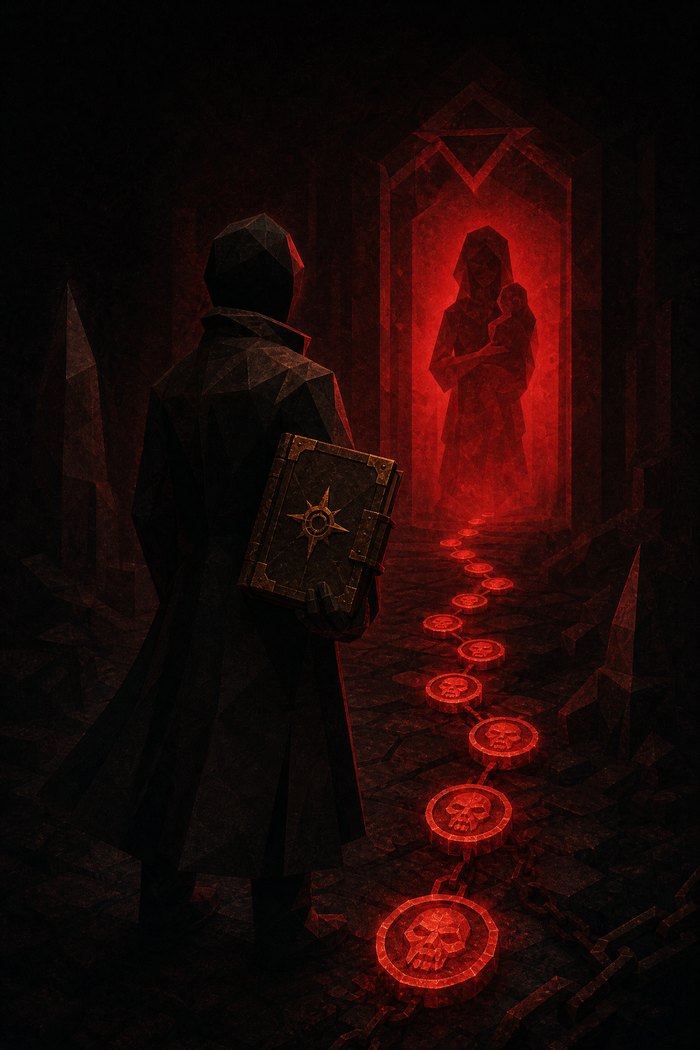
In a world where death is not the end but the beginning of a far more terrifying journey, Marcus Chen discovers he has been recruited into the Debt Collection Agency—an ethereal organization that harvests the souls of the indebted. But here's the catch: the debt isn't monetary. It's karmic. Each soul carries an invisible weight of wrongdoings, and the Agency ensures these debts are paid—through suffering, through terror, or through the most agonizing fate of all: eternal servitude. Marcus, now bound to the Agency, must navigate through nightmares made flesh, confronting his own past sins while hunting down those whose karmic ledgers run deep with darkness. His greatest challenge? His first assignment: collect the soul of his own mother.

Share:

All Episodes

5 Episodes
Episode 07 min read

Episode 1: The Awakening

Share:

Marcus Chen had been staring at the same spreadsheet for three hours, the numbers blurring together into an incomprehensible mess of red and black. His coffee had gone cold an eternity ago, sitting forgotten beside his keyboard, a ring of brown staining the edge of the mousepad. The fluorescent lights of his cubicle buzzed with a frequency that seemed to drill directly into his temples, each flicker sending a small spike of pain behind his eyes. He couldn't remember the last time he'd actually felt awake, truly alive, as opposed to simply going through the motions of existence in this corporate purgatory they called a cubicle farm. He was drowning in spreadsheets, and in more ways than one.

A cascade of failures had led him here—to this fluorescent-lit hellscape, to this cramped cubicle that smelled faintly of stale coffee and despair, to this life that felt like a slow-motion train wreck he couldn't bring himself to step away from. Marcus remembered the exact moment his life had started its descent into this monotonous nightmare. Four years ago, freshly graduated with a degree in finance and a head full of dreams about Wall Street and making his fortune, he'd stepped into the gleaming offices of Hartwell & Associates with stars in his eyes. Six months later, the company had collapsed in a scandal involving fraudulent accounts—a Ponzi scheme that had destroyed the retirement accounts of hundreds of innocent people.

Marcus had been just a small cog in the machine, a junior accountant who had signed off on documents he hadn't fully understood, following orders from above without questioning the implications. He'd been cleared of any criminal wrongdoing, but the stigma had followed him like a shadow, a dark stain that no amount of explanation could fully wash away. The unemployment that followed had been brutal—rejection letters piled up in his inbox like evidence of his failure, each one a small death of his hopes and ambitions. The debt had accumulated like compound interest, each month of unemployment adding another layer of financial strain. Student loans didn't pause for personal crises, and credit card companies certainly didn't care that their cardholder was struggling to find meaningful employment.

By the time he'd finally landed this job at Davies & Chen three years ago, the damage was already done. The collection calls came daily, then twice daily, then finally, in a desperate act of self-preservation, Marcus had stopped answering. He'd changed his number twice, but the debt—the debt followed him, a specter that seemed to exist outside the normal channels of financial systems. Marcus sat in his cubicle, surrounded by the soft murmur of keyboards and the occasional clatter of dishes from the break room. Everyone around him seemed so utterly ordinary, so completely absorbed in their own little worlds of spreadsheets and meetings and small talk about weekend plans.

What secrets did they hide? What sins weighted them down? The thoughts came unbidden, intrusive and impossible to ignore, and Marcus found himself wondering what price each of these people would eventually have to pay for their ordinary lives. He had no idea how right he was. The elevator dinged at 5:00 PM and Marcus gathered his things with the enthusiasm of a condemned man granted a temporary reprieve from his cell. He nodded to David, his cubicle neighbor, and smiled at Janet from accounting as he passed her desk, both interactions mechanical and devoid of any real connection or warmth.

The fluorescent lights hummed their eternal song as he walked toward the parking garage, their buzzing seeming to grow louder with each step, as if trying to communicate something important that his exhausted brain simply couldn't process. He pressed the button for the parking level and waited, listening to the soft ding that echoed through the concrete stairwell, a sound that seemed to come from very far away. Marcus didn't notice the man standing in the corner of the elevator until it was too late. He hadn't been there a moment ago—Marcus was certain of that, absolutely certain, because he had looked at this elevator at least a thousand times over the past three years and he had never once seen another person waiting on the parking level.

The stranger was tall, impossibly tall, with a face that seemed to shift and change in the dim emergency lighting, never quite settling into any recognizable features. His eyes were the worst part—black holes that seemed to absorb the very light around them, drawing Marcus's gaze in and refusing to let go. Marcus's survival instincts screamed at him to step back, to find another way down, but his legs refused to cooperate, frozen in place by a fear that went far beyond the rational. The doors began to close, and in that moment of slowing metal and shadow, the man spoke. "Marcus Chen," he said, his voice like the grinding of ancient stones, each syllable resonating with a weight that seemed to press against Marcus's chest. "You're three months behind on your karmic payments."

The words hit Marcus like a physical blow, his lungs seizing up as he struggled to process what was happening, what could possibly be happening in this ordinary parking garage on an ordinary Tuesday evening. Marcus had no idea what the stranger meant, no idea what karmic payments could possibly mean in any context he understood. His confusion must have shown on his face because the tall man tilted his head slightly, his features still shifting and unclear, like a photograph slowly coming into focus. "That's quite alright," the stranger said, a thin smile spreading across his face—a smile that didn't reach those terrible, light-devouring eyes. "We have documentation." The man produced a leather-bound book from somewhere within his long coat, its cover worn and ancient, filled with symbols that seemed to writhe and move in the dim light.

He opened it to a page marked with Marcus's name, and the accountant felt his blood run cold as he caught a glimpse of the entries inside—dates, events, sins. The ledger knew everything. The stranger's smile widened. "Shall we discuss payment options?" The elevator dinged, the doors sliding open onto the parking level with a soft hiss. But before Marcus could bolt, before he could even process the flight instinct that was screaming through his nervous system, the stranger raised one long, pale finger to his shifting lips. "Ah-ah-ah," he whispered, the sound somehow louder than the stranger's previous words, echoing through the concrete space like a thunderclap. "Running only makes it worse, Mr. Chen. The interest on your debt has already begun to accrue."

He stepped back into the shadows of the elevator, the leather-bound book vanishing into his coat as if it had never existed at all. "Tonight, you'll dream. Tomorrow, you'll begin." The doors began to close once more, and Marcus stood paralyzed, watching them seal shut on the impossible, on the man who shouldn't have been there, on the words that couldn't possibly mean anything but somehow meant everything. He stood there for what felt like an eternity but was probably only seconds, his mind reeling, his body refusing to move, until finally, his legs gave out and he slumped against the cold concrete wall of the stairwell.

He was still sitting there when security found him twenty minutes later, muttering about debts and ledgers and things that shouldn't exist. They sent him home with a pat on the shoulder and a suggestion that he maybe take some time off, that he seemed stressed, that they were worried about him. Marcus drove home in a daze, the familiar streets of his apartment complex blurring past like a dream he's about to forget. He didn't sleep that night. He couldn't. Every time he closed his eyes, he saw that terrible book, felt the weight of those impossible words pressing down on him like a physical force.

When sleep finally claimed him sometime around 4 AM, it came not as a relief but as a doorway into something far, far worse. Marcus dreamed, and in his dreams, the Debt Collector came to collect.

Episode 15 min read

Episode 2: The Ledger Opens

Share:

The dream began in darkness—absolute, suffocating darkness that pressed against Marcus's eyes like a physical weight. He couldn't move, couldn't breathe, couldn't scream. He was suspended in nothingness, his body floating in an void that seemed to extend infinitely in every direction. And then, slowly, like eyes opening in an ancient face, points of light began to appear around him. Hundreds of them. Thousands. Each one glowing with a faint crimson hue that cast unsettling shadows in the darkness.

Marcus realized with dawning horror that these weren't stars. They were eyes. Thousands of eyes, watching him, waiting for him, judging him. And then a voice spoke—though it came not from any direction but from inside his own head, from the very core of his being where his deepest fears resided.

"Welcome to your first day of employment."

The eyes began to move, coalescing into a shape—a massive, ancient ledger that materialized from the darkness like a ship rising from black waters. Its cover was bound in what looked like human skin, stretched taut over wooden boards that seemed to pulse with a heartbeat of their own. The pages were yellowed, brittle, filled with handwriting that shifted and changed as Marcus watched, as if the ink itself was alive.

"Every soul that has ever lived carries a debt," the voice continued. "Not a monetary debt. Not a debt of love or labor or loyalty. A karmic debt. The accumulated weight of every wrong committed, every harm caused, every sin committed against the universe itself."

Marcus wanted to protest, wanted to scream that this was impossible, that he was just an accountant who had signed some documents he didn't fully understand. But his voice wouldn't come. His body still floated in the void, paralyzed by a fear that went beyond mere terror into something primal, something existential.

"You think you are innocent," the figure said. "You think your involvement in the Hartwell & Associates scandal was minor, that you were merely following orders. But the universe keeps perfect accounts, Mr. Chen. Every signature you penned contributed to the suffering of 247 families who lost their retirement savings. Every document you approved enabled further fraud. Your karmic debt is substantial—not crushing, but significant. And now, you will begin to pay."

The ledger opened, its pages rustling like dry leaves in an autumn wind. Marcus saw his name appear on the first page, followed by a list of entries that made his stomach turn. Dates, names, amounts—but not dollar amounts. Something else. Numbers that seemed to pulse and writhe on the page, numbers that represented suffering, loss, pain. His own debt stared back at him in stark black and red.

"You have three choices," the figure said. "Pay your debt through suffering—experience in your own life the pain you caused others. Pay through service—work for the Agency, collecting the debts of others until yours is satisfied. Or refuse—and face the consequences."

"What consequences?" Marcus tried to ask, but his voice still wouldn't work.

The figure smiled—a terrible smile that showed too many teeth, teeth that gleamed like polished bone in the crimson light. "The debt does not disappear, Mr. Chen. It only grows. Interest accrues. And when it becomes too large to pay through service, it must be paid through eternity. You become one of us. A collector. Bound to the Agency forever. Collecting debts you can never repay, serving an organization that never dies, hunting souls until the heat death of the universe itself."

The ledger slammed shut with a sound like a coffin lid closing.

"Choose," the figure commanded.

Marcus woke up gasping, drenched in sweat, his heart pounding so hard he could feel it in his throat. He was in his apartment, in his bed, in the grey light of early morning. For a moment, he thought it was just a dream—nightmare, yes, but just a dream. Then he looked at his hands and saw the ink.

Black ink, smeared across his palms and fingers, as if he had been writing for hours. And on the inside of his wrist, in perfect handwriting that was unmistakably his own, was a single word:

"ACCEPTED."

Marcus scrambled out of bed and ran to the bathroom, turning on the light and staring at his reflection in the mirror. His face was pale, gaunt, his eyes red-rimmed and haunted. But it was his expression that terrified him most—a look of grim resignation that he had never seen on his own face before, as if some part of him had already made a decision he wasn't consciously aware of.

His phone buzzed on the nightstand. He walked to it slowly, dreading what he might find. It was a text from an unknown number: "Orientation begins at midnight. Do not be late. —The Agency"

Marcus Chen sat down on the edge of his bed and stared at the message for a long, long time. He thought about his life—the failures, the compromises, the slow slide into irrelevance and debt. He thought about the families at Hartwell & Associates, the ones he had never tried to find out what happened to them after the company collapsed. He thought about all the small cruelties and careless harms he had inflicted over the years without ever thinking twice.

And then he thought about eternity.

"I accept," he whispered to the empty room.

The ink on his wrist began to glow.

Episode 27 min read

Episode 3: Orientation Night

Share:

The building had no address. Marcus stood on the corner of a street he had never seen before in a part of the city he didn't know existed, staring at the nondescript office building that seemed to flicker between solid reality and something that wasn't quite there. One moment it was a crumbling tenement from the 1920s, its windows dark and broken; the next it was a gleaming modern structure of glass and steel that reflected lights that didn't exist. It was both and neither, existing in some liminal space between worlds.

The text had included directions: "Find the door that isn't there. Knock three times. Speak the name of your greatest sin." Marcus had spent the entire day dreading this moment, rehearsing what he would say, what his greatest sin actually was. Was it Hartwell & Associates? Was it the time he had let his colleague take the blame for his mistake? Was it something else entirely, something he had never told anyone about?

He walked up to the building, and as he approached, he realized that the directions were more literal than he had imagined. There, in the middle of a solid brick wall between two storefronts, was a door. Not hidden behind illusion or camouflage—it simply was not there until he looked at it directly, at which point it became undeniably, physically present.

Marcus raised his hand and knocked three times. The sound echoed strangely, as if it traveled both forward and backward through time.

"I don't know my greatest sin," he said, and his voice sounded hollow and pathetic in the darkness.

The door swung open, revealing not a lobby or hallway but an abyss—a vertical drop into darkness so complete that Marcus couldn't see the bottom. A rope ladder materialized from the threshold, its rungs made of what looked like human finger bones, bleached white and polished smooth by countless hands climbing up and down.

"Everyone says that," a voice called from below. "Then they remember."

Marcus took a deep breath and began to descend.

The fall lasted either seconds or hours—time had no meaning in this place, this space between spaces where the Agency had its headquarters. When he finally reached the bottom, he found himself standing in a vast chamber that seemed to stretch infinitely in all directions. The ceiling, if there was one, was lost in darkness above. The floor was made of ledger pages, millions of them, covering the ground in layer upon layer of yellowed paper, each one inscribed with names and debts and sins stretching back through millennia.

And standing in the center of the chamber, waiting for him, were the others.

They wore suits—modern, expensive-looking suits in charcoal and navy and black—but their faces were wrong. Too perfect in some, too blank in others, and in a few, distinctly inhuman, with features that seemed to shift and change even as Marcus watched. These were collectors, he realized. His new colleagues. Men and women who had made the same choice he had made, who had traded years of service for an eternity of debt.

"Fresh meat," one of them said—a woman with red hair and eyes that glowed faintly in the darkness. "What'd you do? Numbers?" She said it like a joke, like she had heard it a thousand times before.

"Accounting," Marcus admitted. "I was an accountant."

"Ah, a paper pusher." The woman's smile was sympathetic but cold. "You'll fit right in. We need someone who can read ledgers, count debts, calculate interest rates. The old ways are making a comeback, and we're swamped."

A man stepped forward—tall, gaunt, with the look of someone who had once been handsome but had lost something essential along the way. His eyes were completely black, no whites at all, just pools of absolute darkness that seemed to pull Marcus's gaze in and refuse to let go.

"I am your handler," the man said, his voice like dry leaves rustling. "You will call me Mr. Blackwood. I was once like you—terrified, confused, desperate. Now I am something else. Something better." He paused, and for a moment, his expression flicktered with something that might have been regret or might have been hunger. "Or worse. The line is thin."

He handed Marcus a leather-bound book—smaller than the massive ledger in his dream, but clearly related, clearly part of the same system. Marcus opened it and saw his name on the first page, followed by a list of his debts. The numbers next to each entry pulsed with a sickly light.

"Your first assignment," Mr. Blackwood said. "A woman in Queens. Eleanor Vance. She poisoned her husband fifteen years ago and has never been caught. Her debt is substantial but not crushing. You will appear in her dreams tonight, show her the weight of what she carries, and give her a choice: pay through confession and punishment, or refuse and face the consequences."

"What if she refuses?" Marcus asked.

Mr. Blackwood's black eyes seemed to smile. "Then the debt compounds. And you will return tomorrow night, and the night after that, each time the price for refusal higher. Until she either pays or the debt becomes too great, and then..." He didn't finish the sentence. He didn't need to.

"And my own debt?" Marcus asked. "How do I pay that? How do I get out of this?"

"By collecting," Mr. Blackwood said simply. "Every debt you collect reduces your own by a small percentage. A soul who confesses and serves their time—what we call 'completing the cycle'—takes a fraction of a point off your total. A soul who refuses and must be claimed outright takes more. It will take years. Decades, perhaps. But time means nothing to the Agency. Time is merely currency, and we have an infinite supply."

He turned and walked away, and the other collectors followed, leaving Marcus alone in the vast chamber with his new book and his new duties and his new eternity stretching out before him like an endless road with no exit.

Marcus looked at the name in his ledger: Eleanor Vance. He thought about what he was about to do—invade this woman's dreams, show her the horror of her own soul, force her to confront what she had done. It was monstrous. It was cruel. It was exactly what the universe had planned for him.

"I'm sorry," he whispered to no one, to everyone, to himself. "I really am."

Then he opened the ledger and began to study his first assignment.

Eleanor Vance had killed her husband with arsenic in his tea on March 15th, 2009. She had collected the insurance money. She had told everyone he had died of heart failure. She had never shown a moment of remorse. She had lived comfortably ever since, traveling, spending, enjoying the fruits of her crime.

But the universe kept perfect accounts.

And now Marcus Chen, former accountant, current debt collector, would help collect what was owed.

He closed the ledger.

He began to walk toward the exit.

And as he climbed the rope ladder back toward the world he had always known, Marcus Chen made a silent promise to himself: he would do this job as humanely as possible. He would give every debtor a fair chance to confess, to atone, to pay their debt in ways that didn't destroy their lives completely. He would remember what it felt like to be on the other side of this equation, to be the one being hunted instead of the hunter.

He would try, at least.

Because the alternative was becoming like Mr. Blackwood—someone who had been just as scared, just as desperate, just as human as Marcus was now. And look what eternity had done to him.

Marcus climbed out of the darkness and back into the night.

His first assignment awaited.

Episode 311 min read

Episode 4: The First Collection

Share:

Eleanor Vance lived in a brownstone in Brooklyn that cost more than Marcus had made in five years at Davies & Chen. The building was beautiful—old money beautiful, the kind of architectural elegance that whispered about trust funds and inheritance and generations of wealth carefully preserved and passed down like heirlooms. The neighborhood was quiet, tree-lined, the kind of place where the biggest crime was parking too close to someone's driveway.

Marcus stood across the street, watching the third-floor windows where a single light burned. It was past midnight, but Eleanor was still awake. He could feel her—a cold, gnawing presence that seemed to seep through the walls of the building and into his bones. Her debt was old. Deep. The kind of darkness that had festered for years without any attempt at confession or redemption.

Mr. Blackwood had given him the full file before he'd climbed back to the surface world. Eleanor Vance had poisoned her husband with arsenic over a period of three months in 2009. She'd collected the insurance money—two million dollars. She'd used it to travel the world, to buy properties, to live a life of comfort and ease while her husband's family mourned a man they thought had simply died of heart failure. She'd never shown remorse. She'd never confessed. She'd never even considered that what she'd done might have consequences beyond the ones she could see.

But the universe kept perfect accounts.

Marcus crossed the street. The building's entrance was locked, but locks meant nothing to someone wearing the Agency's mark. He pressed his palm against the door and felt the metal warm beneath his touch, the mechanisms clicking and sliding as if anticipating his arrival. The door swung open, and he stepped into a lobby that smelled of old wood and money.

The elevator was ornate, brass and mahogany, the kind of thing you'd find in a museum rather than a functioning residential building. Marcus stepped inside and pressed the button for the third floor. The elevator rose without sound, without vibration, as if it existed in a space between spaces where the normal rules of physics had been suspended.

When the doors opened, he was standing in a hallway that stretched into darkness. The light from Eleanor's apartment beckoned at the far end—a warm, golden glow that seemed almost inviting, almost safe. Marcus walked toward it, his footsteps echoing on hardwood that felt ancient beneath his feet.

The door to Eleanor's apartment was already open. Not all the way, just a crack, enough for him to see the sliver of light that spilled into the hallway and hear the soft sound of classical music playing somewhere inside. Mozart, he thought. Something from the Requiem, maybe. The thought sent a chill down his spine.

He pushed the door open and stepped inside.

The apartment was beautiful. Expensive. The kind of space that screamed about wealth and taste and generations of inherited elegance. The furniture was antique, the art was original, the books that lined the walls were first editions with gilded spines and leather bindings. Everything in this space was a testament to a life built on the ruins of someone else's death.

Eleanor Vance was sitting in a wingback chair by the window, a glass of wine in her hand. She was older than the photograph in his ledger—seventy-three now, her hair silver-white, her face lined with the kind of age that came from decades of comfort and ease. But her eyes were sharp, alert, watching him with an intelligence that seemed at odds with the calm, collected expression on her face.

"You're not a burglar," she said. Her voice was steady, unruffled, as if she'd been expecting him. "You walk too quietly for that. And you've got that look."

"What look?" Marcus asked, though he already knew the answer. He could feel it in his own face—the weight of the ledger, the weight of his duty, the weight of all the debts he'd ever owed and all the debts he was now responsible for collecting.

"The look of someone who knows something they shouldn't." Eleanor took a sip of her wine. "I've seen it before. In mirrors. In the faces of people who've come asking questions about Richard."

Marcus didn't respond. He walked further into the apartment, his eyes scanning the space, taking in the details—the family photographs on the mantelpiece, the books with their pressed-paper bookmarks still marking places, the half-empty bottle of wine and the single glass that suggested she'd been sitting here alone for a long time.

"Richard was my husband," Eleanor said, filling the silence before he could. "He died eight years ago. Heart failure, they said. Though I suppose you already know that."

"I know more than that," Marcus said. He stopped in the center of the room, standing between Eleanor and the window, making himself the thing she had to look at, the thing she couldn't avoid. "I know about the arsenic. I know about the three months. I know about the insurance money and the properties and the comfortable life you've built on his corpse."

Eleanor's composure didn't crack. She didn't gasp or protest or try to deny what he'd said. She simply looked at him with those sharp, intelligent eyes, and when she spoke again, her voice was calm, measured, as if she were discussing the weather rather than her own murder.

"You're one of them, aren't you? The ones who come for people like me."

"People like you?"

"People who did what needed to be done. People who made choices. People who got rid of problems that wouldn't go away any other way." She set her wine glass down on the side table with a soft click. "Richard was not a good man, you know. He was cruel. He was controlling. He would have destroyed me eventually—I saw it in his eyes, in the way he looked at me, in the way he talked about what he'd do if I ever tried to leave. He had money. He had lawyers. He had all the power in the world, and he would have used it to make sure I suffered for the rest of my life."

"So you killed him," Marcus said. "You made a choice."

"I made a choice." Eleanor stood up from her chair, and Marcus noticed that she wasn't afraid. She should have been afraid—standing face to face with someone who had come to collect her debt should have terrified any normal person. But Eleanor Vance was not a normal person. Eleanor Vance had killed a man and lived with the consequences, or rather, the lack of consequences, for eight years. "I made a choice, and I'd make it again. He was going to destroy me. I destroyed him first. That's how the world works."

"That's how some people think the world works," Marcus said. "But the universe keeps different accounts."

He opened the ledger—the leather-bound book that had appeared in his hands without him remembering picking it up—and began to read. The words poured out of him, pouring into the space between them, filling the apartment with a presence that hadn't been there before. A presence that made the air heavy, that made the lights flicker, that made Eleanor's face finally, finally show something other than calm confidence.

Fear.

"You stole forty years from Richard," Marcus said, his voice taking on a quality that wasn't quite his own, wasn't quite human, was something else entirely. "Forty years of life, of choices, of experiences that he should have had. You stole them because you were afraid of what he might do, and in doing so, you created a debt that cannot be measured in money or time or any of the things you understand."

The lights flickered again. The classical music that had been playing so softly in the background seemed to grow louder, more discordant, the notes stretching and warping into something that sounded almost like screaming.

"Every night for the next year, you will dream of Richard's death. You will see it from his perspective. You will feel the arsenic burning in your stomach, the confusion, the fear, the slow realization that someone you trusted was killing you. You will experience his death as many times as he experienced life without you."

Eleanor's hands were shaking now. She reached for the side table, for something to hold onto, something to steady herself. "No," she whispered. "No, that's not—"

"Every week for the next three years, you will donate half of your income to the families of domestic violence victims. You will give them money, time, resources. You will not do this anonymously. You will meet them, speak with them, hear their stories. You will understand the damage that people like Richard—and people like you—can do to the ones they claim to love."

The ledger was glowing now, its pages turning on their own, revealing entries that seemed to stretch back through Eleanor's entire life. Her debt was written there, in black and red ink that seemed to pulse and writhe on the yellowed pages. Every sin, every wrong, every moment when she had chosen herself over someone else was recorded in perfect, unflinching detail.

"And at the end of your life," Marcus continued, his voice growing deeper, darker, "when you finally face the judgment you've been running from for eight years, you will be shown exactly what you took. Not just from Richard, but from everyone you hurt along the way. His family, who lost a father and a grandfather. Your family, who lost a sister and an aunt. The people you could have helped but didn't, the causes you could have supported but didn't, the good you could have done but chose not to."

Eleanor fell to her knees. The wine glass shattered on the hardwood floor, red liquid spreading across the ancient wood like blood. "Please," she said, and her voice was breaking now, cracking under the weight of what was happening to her. "Please, I'll confess. I'll turn myself in. I'll tell them what I did. Just stop. Please stop."

Marcus looked at her—this woman who had killed her husband and lived without remorse, who had built a beautiful life on a foundation of murder, who had never once considered that her actions might have consequences beyond the ones she could control. He thought about his own debt, his own sins, the moments in his own life when he had chosen himself over others and created karmic imbalances that would take years to correct.

"The confession is not for me," he said quietly. "The confession is for you. You will go to the police. You will tell them what you did to Richard. You will let the justice system do what the universe could not—hold you accountable in the world of the living, where your confession can help others, can protect others, can prevent what happened to Richard from happening to someone else."

He closed the ledger. The glowing stopped, the presence faded, and Eleanor Vance was left kneeling on the floor of her beautiful apartment, surrounded by broken glass and the ruins of the life she'd built on murder.

"When you're ready," Marcus said, "go to the police. Tell them about the arsenic. Tell them about the insurance money. Tell them everything. After that, the rest of your penance will be easier to bear."

He walked toward the door. Behind him, he heard Eleanor begin to cry—the first honest tears she'd shed in eight years, maybe in her entire life. The sound followed him out of the apartment, down the hallway, into the elevator, all the way back to the surface world where the night air was cold and clean and completely ordinary.

His first collection was complete.

But as Marcus walked home through the empty streets of Brooklyn, he couldn't shake the feeling that something had changed inside him. The fear he'd felt at the Agency's headquarters, the terror of facing his own debt and his own mortality, had faded to something else. Something that felt almost like purpose.

He was collecting debts. He was helping people face their sins. He was, in his own small way, helping to balance the scales of the universe.

It wasn't redemption. Not yet. Maybe not ever. But it was something.

And as he turned the corner onto his street, Marcus saw his mother's house in the distance, the windows dark, the porch light off. He thought about the ledger in his pocket, the debts he'd seen recorded there, the list of names that included people he knew, people he'd loved, people who owed karmic debts of their own.

Including his mother.

Including himself.

The collection would continue.

The debt would be paid.

One way or another.

Episode 412 min read

Episode 5: The Mother's Shadow

Share:

The call came at 3 AM, three weeks after Marcus had completed his first collection. He was asleep when it happened—not the restless, nightmare-filled sleep of his early days with the Agency, but the deep, exhausted sleep of someone who had been working hard and trying not to think about the implications of what they were doing. The phone rang once, twice, three times, and then the voice came through.

"Marcus. It's time for your next assignment."

Mr. Blackwood's voice was the same as always—calm, measured, utterly devoid of any emotion that might suggest humanity. But there was something else in it now, something that made Marcus sit up in bed and reach for the lamp on his nightstand.

"What's the assignment?" he asked, already reaching for the leather-bound book that had appeared on his nightstand at some point during the night. He didn't remember putting it there. He didn't remember seeing it before. But it was there, and when he opened it, the pages fell to a name he recognized.

The name was Linda Chen.

His mother's name.

"I can't," Marcus said. The words came out before he could stop them, before he could think about the implications, before he could do anything except react to the name he'd just seen written in his ledger. "She's my mother. I can't collect from my own family."

"Everyone owes," Mr. Blackwood said. His voice didn't change, didn't soften, didn't show any hint of understanding or compassion. "Every soul carries debt. Every debt must be collected. The Agency does not make exceptions for blood ties. The universe does not spare mothers because their children work for the Agency."

"But I—"

"Your mother," Mr. Blackwood continued, "killed your father."

The words hit Marcus like a physical blow. He fell back against the headboard of his bed, the ledger falling open in his lap, the pages filled with information he'd never known, never suspected, never imagined. His father hadn't died in a car accident, the way he'd always been told. His father had been murdered. Poisoned, like Eleanor Vance had poisoned her husband. Poisoned by the woman Marcus had loved and trusted his entire life.

"She used arsenic," Mr. Blackwood said. "Three months. February to May 1998. Your father was planning to leave—divorce, custody battle, the whole thing. She couldn't bear to lose you, so she made sure he'd never leave. She mixed the arsenic into his food, his coffee, his vitamins. She watched him weaken. She watched him die. She told everyone it was a heart attack."

Marcus couldn't speak. He couldn't move. He sat on the edge of his bed, staring at the ledger, watching the words that described his mother's crime scroll across the pages. The details were there—all of them, every moment of the long, slow murder that had defined his entire childhood.

"She framed it as a car accident because the investigation was too thorough," Mr. Blackwood continued. "The arsenic would have been detected in an autopsy. But you were four years old. You don't remember any of that. You don't remember the real story."

"What do you remember?" Marcus asked, his voice barely a whisper.

"You remember your mother crying at the funeral. You remember her holding you and telling you everything would be okay. You remember growing up in a house where your father was never mentioned, where his photographs were hidden away in boxes, where his name became a secret your mother kept from everyone, including you."

Marcus closed his eyes. The memories were flooding back now—not real memories, not things he actually remembered, but things that felt like memories, things that had been planted in his mind at some point and carefully cultivated over the years. His father's absence. His mother's grief. The way she'd always been a little too protective, a little too controlling, a little too eager to keep him close and keep him safe.

"Every choice she made after your father's death was to protect herself," Mr. Blackwood said. "She moved to a new town. She changed careers. She built a life that would never bring attention to what she'd done. And she raised you alone, telling you the story she wanted you to believe, shaping you into the person she needed you to be."

The pieces were falling into place now. Marcus saw his entire life in a new light—the way his mother had always discouraged him from asking questions, from digging into the past, from trying to find out anything about his father. She'd kept him ignorant because her survival depended on that ignorance.

"Why now?" Marcus asked. "Why am I being asked to collect from her now? What changed?"

"Nothing changed," Mr. Blackwood said. "You're ready. You've proven yourself capable of collecting from strangers, from people who meant nothing to you. Now you must prove that you can collect from the ones who matter most."

"That's not fair."

"Fairness is not the currency of the universe. Debt is. Your mother owes. You will collect. That is the only truth that matters."

The line went dead. Marcus sat in the darkness of his bedroom, holding the ledger that contained his mother's sins, and felt the weight of his own debt pressing down on him like a physical force.

He had wanted to believe he was different from Mr. Blackwood. He had wanted to believe that he could do this job humanely, that he could give people chances to confess and atone, that he could balance the scales without becoming a monster. But now, faced with the choice between his duty and his family, Marcus understood the truth.

The Agency didn't care about fairness. The Agency didn't care about compassion. The Agency only cared about the debt, and the debt would always be paid.

He had three days before the collection was due. Three days to decide what he was going to do.

On the first day, Marcus drove to his mother's house. It was a small, neat bungalow in a quiet neighborhood—the same house he'd grown up in, the same house where he'd learned to ride a bike and do homework and dream about the future. The lawn was trimmed. The flowers were blooming. Everything looked exactly as it had when he'd left for college, when he'd moved to the city, when he'd started the job that had eventually led him to the Agency.

His mother answered the door with a smile. She was sixty-eight now, her hair more gray than brown, her face lined with age, but her eyes were the same—warm, loving, the eyes of a mother who would do anything to protect her child.

"Marcus!" she exclaimed, pulling him into a hug. "What a surprise! You didn't call ahead."

"I needed to see you," Marcus said. The words felt wrong in his mouth, heavy with implications his mother couldn't possibly understand. "I needed to ask you some questions."

She led him inside, into the living room where they'd watched TV together on Sunday nights, where they'd eaten dinner together on weekdays, where they'd built a life together on a foundation of lies and murder. She made tea while Marcus sat on the couch and tried to keep his hands from shaking.

"What kind of questions?" she asked, settling into her usual chair across from him.

"About Dad," Marcus said. "About how he died."

His mother's face changed. The smile faded. Something flickered in her eyes—fear, maybe, or something darker, something that had been waiting beneath the surface for twenty-five years.

"We talked about this," she said carefully. "Your father died in a car accident. There was nothing I could have done to save him."

"But you could have saved him," Marcus said. His voice was steady now, cold, the way it always got when he was reading from the ledger. "If you'd known about the arsenic in his system. If you'd called for help sooner. If you'd admitted what was happening instead of hiding it."

The color drained from his mother's face. She set down her teacup with trembling hands, her eyes locked on his, and Marcus saw the truth he'd always suspected but never been able to confirm.

"You know," she whispered. "How do you know?"

"The universe keeps perfect accounts," Marcus said. The words sounded familiar even as he spoke them, as if they'd been spoken by someone else, through him, using his voice as a vessel for a message he'd never chosen to deliver. "And I'm here to collect what you owe."

For a long moment, neither of them moved. The clock on the mantelpiece ticked. The tea grew cold. The silence stretched between them like a chasm that could never be crossed.

Then his mother laughed. It was a small, bitter sound, more a cough than a chuckle, and when Marcus looked at her, he saw something in her face he hadn't expected.

Relief.

"I wondered when they'd come for me," she said. "I've been waiting for twenty-five years. Every time the phone rang, every time there was a knock on the door, every time I saw a stranger on the street—I wondered if this was the moment. If this was when the debt would come due."

"You knew," Marcus said. "You knew this would happen."

"I killed your father," she said. "I poisoned him over three months because I was too afraid to face the divorce, too afraid to lose you, too afraid to let him take away the life I'd built. I told myself it was protection. I told myself I was keeping you safe. But I knew—I always knew—that eventually, someone would come to collect what I owed."

The words hung in the air between them. Marcus looked at his mother—this woman who had raised him, loved him, lied to him his entire life—and felt the weight of the ledger pressing against his chest like a physical burden.

"I won't turn you in," he said finally. "The confession doesn't have to be public. It doesn't have to be about punishment. It can be about redemption."

His mother shook her head. "No. The public confession is part of the debt. You told Eleanor that, didn't you? The universe requires accountability. The universe requires truth. The only way I can begin to pay what I owe is to tell the world what I did."

"But the truth will destroy everything. Your reputation. Your freedom. Your life."

"I killed your father," she said again. "I let you grow up believing a lie. I stole your real history, your real father, your real family—all to protect myself from consequences I should have faced twenty-five years ago."

She stood up from her chair, walked across the room, and knelt in front of Marcus. Taking his hands in hers, she looked up at him with eyes that were wet with tears.

"I'm sorry," she said. "I'm sorry for what I did to your father. I'm sorry for what I did to you. I'm sorry for all the lies, all the secrets, all the ways I failed you as a mother and as a person."

Marcus felt the weight in his chest shift, change, transform into something different. The ledger in his pocket was warm now, pulsing with a light that seemed to be coming from somewhere outside himself. He reached for it, pulled it out, and watched as his mother's name glowed on the page.

The debt was still there. The debt would always be there. But the words beneath the name had changed.

Instead of "Unconfessed, Unrepentant, Unpaid," the ledger now read: "Confessed, Remorseful, Penance Pending."

"You confessed," Marcus said, surprised. "You confessed just by admitting the truth to me."

"The universe knows the difference between a true confession and a false one," his mother said. "I have carried this secret for twenty-five years. I have lived with this guilt, this fear, this weight. Speaking it aloud—even just to you—is the first step toward paying what I owe."

They sat together in the living room until dawn, talking about the past, about the lies, about the man who had been Marcus's father and the woman who had killed him. They talked about the life they'd built on murder and secrets, and they talked about what would happen now that the truth was finally coming out.

In the morning, Marcus drove his mother to the police station. She walked into the building with her head held high, her confession ready, her debt acknowledged. Marcus watched from the car as she disappeared through the doors, knowing he would never see her again as a free woman.

But he also knew that she would not face the nightmares, the visions, the eternal torment that awaited debtors who refused to confess. She had faced her crime. She had admitted her sin. She had allowed herself to be judged by the world she'd wronged.

The debt was being paid.

And Marcus, standing in the parking lot of the police station, finally understood what the Agency truly was. It wasn't a punishment. It was a chance. A chance for every soul to face their sins, to confess their crimes, to begin the long journey toward redemption.

It was terrifying. It was cruel. It was the only justice that truly existed.

And Marcus Chen, former accountant, current debt collector, would continue to do the terrible, necessary work of balancing the scales of the universe.

One confession at a time.

Comments on THE DEBT COLLECTOR

Please sign in to leave a comment

Join the community and share your thoughts!

Loading comments...