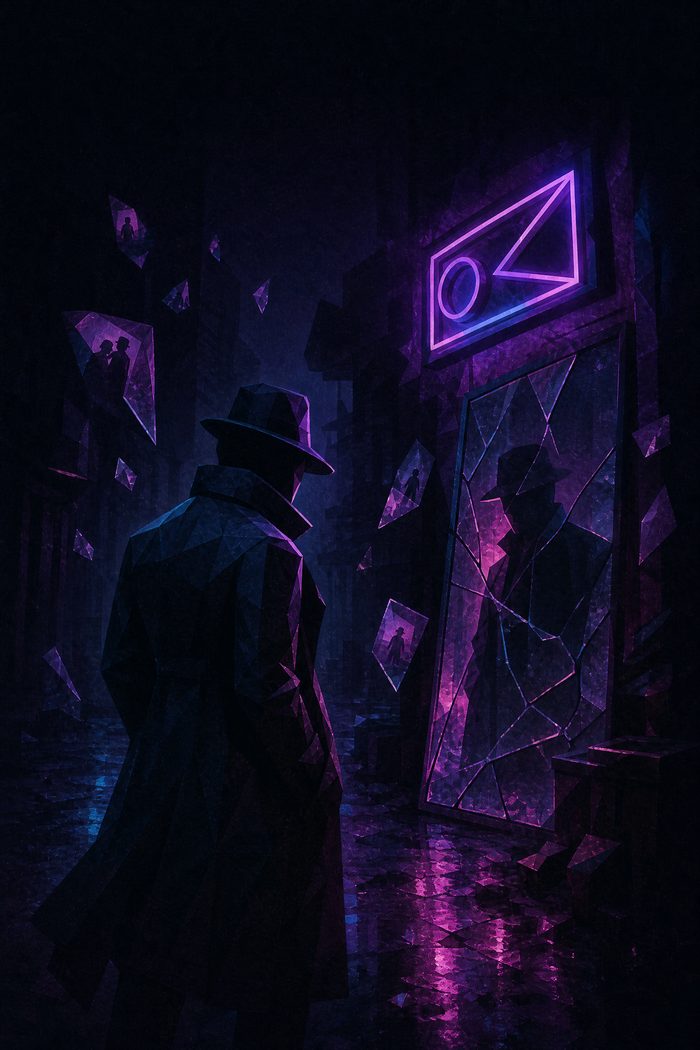
The Dream Thief
The city never sleeps because it cannot afford to. Dreams are currency here — harvested, distilled, sold by the vial in back-alley parlours where the neon flickers in colours that don't exist in nature. The rich drink other people's nights like wine. The poor sell their own mornings to pay for their afternoons. Everybody trades in sleep, and everybody loses.
Detective Mara Venn worked the night shift because she didn't trust her own dreams anymore. Three years ago a case had cost her a piece of her mind — quite literally, a memory dealer had taken three years of her recollections off her hands while she was under, and Mara had woken up with gaps in her head the size of rooms she used to live in. The department had given her a desk, a badge, and a look that said damaged goods. She gave them results. It was the only language she had left.
The Dream Thief was the kind of case they gave detectives who had nothing left to lose.
Six victims in four months, all found the same way: eyes open, mouths slack, dream-filaments cut clean at the stem — the delicate neural threads that anchor a sleeping mind to its body, severed by someone who knew exactly where to cut. No wounds. No evidence. The only thing the victims had in common was that they were all poor, and they all stank, faintly, of lavender and burnt sugar: the signature of a high-grade memory parlor.
Someone was harvesting people whole, and the city didn't care, because the victims were the kind of people the city had already written off.
Mara cared. She cared the way you care about a scar you can still feel. And that was how she ended up, at 02:00 on a Tuesday, in a dream parlor called the Velvet Slip, watching a man in a silk coat sell the nightmares of a sleeping woman to a buyer who paid in cash.
"She won't remember," the silk coat said, sliding the vial across the counter. "They never do. The cut is clean. She'll wake up tomorrow and wonder why she feels so light."
Mara bought the vial. Not to return it — you can't return a dream, the way you can't return a swallowed coin. She bought it because the woman's face was the face of someone who had already been emptied, and Mara wanted to know what the parlor had taken out of her.
That night, in her bare apartment, she pressed the vial to her temple and let the dream in.
It was not the woman's dream. That was the first wrong thing. It was a memory — someone else's memory, old and worn and precious, of a child on a pier at dusk, eating ice cream, laughing at a dog. A happy memory. The best kind. The kind you would pay anything to keep.
And at the edge of the memory, watching the child from the shadow of the pier, was a figure in a long coat, and the figure was watching Mara back.
The dream ended. Mara sat in the dark with her heart slamming, and she understood what the Dream Thief was really doing. He wasn't stealing dreams. He was stealing the good parts — the memories people would die to protect — and leaving the empty shells behind. The victims weren't hollowed out by the cut. They were hollowed out by the grief of losing what they loved most and not being able to remember what they'd lost.
The figure at the edge of the pier stepped out of the shadows in her memory, and Mara felt the floor of her own mind tilt. Because she knew that coat. She knew that posture. She had spent three years trying to remember the face of the dealer who had taken her memories, and here he was, standing in a stolen memory, smiling at her with a smile she had almost forgotten.
"Detective," he said, and his voice came from inside her own head. "You've been looking for me for three years. I've been looking for you for longer. The memories I took from you aren't lost, Mara. I've been keeping them safe. And now that you've found me — I think it's time you had them back."
Mara Venn has spent three years chasing a thief who leaves no evidence.
He has been leaving her evidence all along. She just couldn't remember what it was.