Back to all stories
MR. HENDERSON'S DETENTION

MR. HENDERSON'S DETENTION

MR. HENDERSON'S DETENTION

ongoing3 Episodes34 min read to read
Nightmare Fuel• Close the curtains
HorrorSupernaturalThriller

The stall in the third floor bathroom has a phone number on the wall. When sixteen-year-old Riley Chen calls it, she expects a prank. What answers is a dead teacher who has been waiting for her—waiting since the day he died in Room 204. Now detention is mandatory, attendance is monitored, and the only way out is to understand why Mr. Henderson died and who he really was. A supernatural horror about the price of curiosity and the lessons that transcend death.

Share:

All Episodes

3 Episodes
Episode 011 min read

Episode 1: The Number

Share:

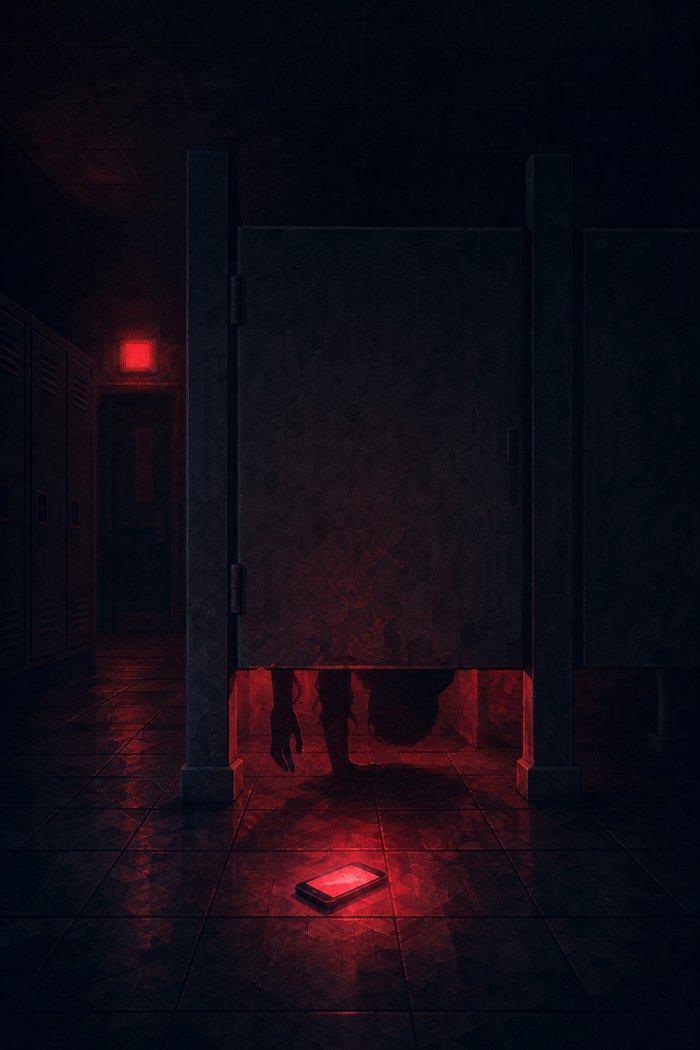
The third floor bathroom had been Riley Chen's refuge since freshman year. While the other kids flooded the first-floor commons during lunch, Riley climbed the stairs to the abandoned wing where custodians rarely ventured, where the fluorescent lights flickered in patterns that seemed almost like a language, where the echoing emptiness gave her a silence she couldn't find anywhere else in Westwood High. She needed this space—needed it the way a diver needs air after too long underwater. Her parents' divorce had been finalized three weeks ago, and the house she'd grown up in was being packed into cardboard boxes while she pretended to be fine at school, fine at home, fine everywhere except inside her own head where the world was slowly caving in.

She sat in the last stall, the one with the door that didn't quite latch properly, and pulled out her phone. Not to text anyone—she had learned that lesson the hard way, seeing how her mother's eyes lit up whenever a notification appeared, that desperate hope that Riley was connecting with friends, making the normal teenage life that Linda Chen had always imagined for her daughter. No. Riley used her phone to read. She had discovered, in the months following her father's departure, that stories could build walls between her and the collapse of everything she'd thought was permanent. Horror stories especially. There was something cathartic about reading about terror that wasn't hers, fear that had clean beginnings and endings rather than the endless, shapeless dread of watching your family disintegrate.

The wall of the last stall had been a canvas for years. Graffiti layered over graffiti, some faded beyond recognition, some still fresh enough to make out. Phone numbers for lawn services. Warnings about bathroom monitors. A crude drawing of what might have been a genitalia or might have been a pizza. And, in the upper corner near the ceiling where only someone sitting on the closed lid could see it, a phone number written in black Sharpie, small and precise, with the words "Call me if you are scared" underneath. Riley had noticed it months ago but hadn't thought much of it—it was probably a joke, or a stupid prank, or just some kid being edgy. But today, something about it pulled at her attention. She didn't know why. She didn't understand the magnetic draw of those words until much later, until she was sitting in that same stall at 3 AM with her phone off but ringing in her hand, wishing she had never looked up at all.

She climbed onto the closed toilet lid, her knees pressing against the cool porcelain, and stretched to photograph the number with her phone. Her fingers brushed against the wall as she steadied herself, and she felt something—a vibration, maybe, or just her imagination working overtime, filling the silence of the abandoned wing with meaning it probably didn't have. The number saved easily into her contacts, labeled "Bathroom Guy" with a question mark, and for a moment she considered deleting it. But curiosity won, as it so often does, especially for sixteen-year-olds who haven't yet learned that some doors are better left unopened. She typed out a single text: "Who's this?" And then she waited, her lunch hour slipping away as she sat in the dim light of a bathroom stall, reading horror stories on her phone and pretending that she wasn't waiting for a response from whatever phantom had written that message on the wall.

The reply came seventeen minutes later, while Riley was walking back to class with a paper bag of untouched food from the cafeteria, her footsteps echoing in the empty stairwell she always used to avoid crowds. The message was from "Bathroom Guy" with the question mark, and it said simply: "Mr. Henderson's class. Room 204. I have been waiting for you." Riley stopped mid-step, her heart suddenly pounding against her ribs, a cold sensation spreading through her chest that had nothing to do with the drafty stairwell. Mr. Henderson. She knew that name. Everyone at Westwood High knew that name, though most students only heard it in whispered warnings and cautionary tales. Thomas Henderson had been a history teacher, known for his strict demeanor and his even stricter detention policies, a man who had died of a heart attack in his classroom fifteen months ago. Room 204 had been locked ever since. The administration said it was for renovation, but the construction paper covering the door's window had yellowed and curled at the edges, suggesting that no renovation had actually taken place, that the room had simply been sealed away like an embarrassing secret.

Riley stared at her phone, her thumb hovering over the message, trying to decide if this was a prank or something else entirely. The timing was too precise, too specific. How would a random stranger know about Mr. Henderson? How would they know about Room 204? Unless this was someone from school, someone who had heard rumors about Riley spending her lunch hours in the abandoned wing, someone playing a cruel joke on the girl whose life had become a cautionary tale about broken homes and acting fine when you weren't. But even as she constructed these rational explanations, Riley felt the wrongness of it—the message had come seventeen minutes after her text, in the middle of a school day, from a number she had never seen before and would never see again once she deleted it. The certainty in those words—I'm waiting for you—felt like more than a prank could explain. She typed back: "Who is this?" and watched the message turn from "Delivered" to "Read" to nothing, no response, just silence where there should have been a punchline.

By the time the final bell rang at 3:15 PM, Riley had told herself it was nothing three dozen times. She had walked past Room 204 on her way to the parking lot, had seen the paper-covered window and the faded "DO NOT ENTER" sign that the janitorial staff had stuck to the door with tape that had gone gummy with age. She had kept walking, kept telling herself that whatever was happening was not her problem, not her concern, something for other people to worry about. Her mother's car was waiting in the pickup line, Linda Chen waving from behind the wheel with that anxious expression she always wore when she was trying too hard to seem normal. Riley climbed into the passenger seat, stuffed her backpack at her feet, and said nothing about the number in the bathroom, the message in her phone, the way her hands were still shaking from something she couldn't name. Her mother asked about school. Riley said fine. Her mother asked about homework. Riley said nothing due. Her mother asked if she wanted to talk about anything, and Riley said no, and the drive home continued in that silence that had become their new normal, two women in a car going nowhere together.

The house was quiet. Her mother had dinner waiting—canned soup and grilled cheese, the kind of meal that said "I tried but I'm exhausted"—and Riley ate at the kitchen island while her mother washed dishes in the sink, both of them pretending that this was the way families were supposed to be. Riley retreated to her room at 8 PM, closed the door, turned on her white noise machine, and tried to read. The horror story she'd been following felt flat, the scares manufactured and obvious in a way they hadn't been that morning. She closed the app and opened her messages, scrolling back to the conversation with "Bathroom Guy" with a persistence that surprised her. The words looked different now in the blue glow of her phone screen—no longer just a prank, but something stranger, something that felt like a door opening in a wall she had thought was solid. She texted again: "What do you want?" No response. She texted: "This isn't funny." No response. She opened the contact info, prepared to block the number, and saw that it was no longer available. Not blocked—unavailable, as if the number had never existed in the first place.

At 3:07 AM, Riley woke to the sound of her phone ringing. Not vibrating, not buzzing, but ringing—the actual musical tone she had set for incoming calls three years ago and never changed. She reached for the phone on her nightstand, her brain still foggy with sleep, and saw the screen lit up with an incoming call from "Bathroom Guy" with the question mark. But she had blocked the number. She knew she had blocked it, had seen the confirmation message, had watched the contact disappear from her messaging app. Yet here it was, calling her at 3 AM, the same seventeen minutes after midnight that seemed to follow her like a curse. She declined the call with a tap that felt like pushing a button on a bomb, her finger trembling against the screen. The call ended. Silence returned to her room, broken only by the white noise machine and the distant hum of the refrigerator in the hall. Then her phone rang again. Same number. Same time. 3:07 AM, the screen said, as if the universe was keeping track of something Riley didn't understand.

She answered on the third ring, her voice rough with sleep and fear. "Hello?" The silence on the other end lasted three full seconds—too long for a prank call, too long for a wrong number, too long for anything except a pause before something important. And then the voice came, and Riley knew it was a man's voice even though it seemed to come from everywhere and nowhere at once, a voice that felt like cold fingers tracing the length of her spine. "Riley Chen," he said, and her name in his mouth made her feel like she had been found, like she had been waiting to be found for longer than she knew. "You hung up. That was rude." Riley tried to speak, tried to ask who this was, but her voice caught in her throat like a bird trapped against glass. "Come to Room 204 after school," the voice continued, and now Riley could hear something beneath it—a sound like breathing, like someone holding their breath for a very long time, like a heart that had forgotten how to beat but remembered how to want. "I will leave the door open." The line went dead. Riley dropped the phone onto her bed, her hands shaking so badly she couldn't have typed a message if her life depended on it. She checked the time: 3:08 AM. She checked her phone's call log: no outgoing calls, no incoming calls, nothing but a phantom ringing that had left no trace in the records.

At breakfast the next morning, Riley sat at her usual table in the cafeteria, pushing scrambled eggs around her plate with a fork while the noise of the room washed over her in waves she couldn't quite process. She hadn't slept. Every time she had closed her eyes, she had seen that number on the wall, had heard that voice saying her name, had felt the weight of an invitation she didn't know how to decline. She considered telling someone—a teacher, the principal, her mother—but what would she say? The dead teacher is calling me? The bathroom graffiti is haunting me? The words sounded insane even in her own head, the kind of paranoid rambling that people attributed to stress and divorce and all the things people said when they wanted to explain away things they couldn't explain. Riley pushed her tray aside and pulled out her phone, opening the camera roll to the photo she had taken yesterday of the number on the wall. She zoomed in, studying the Sharpie strokes, the precise handwriting that looked almost professional in its consistency. Someone had taken their time with this. Someone had wanted this message to last. She saved the photo to her cloud storage, a backup she couldn't explain even to herself, and then she deleted it from her phone as if she could delete the memory from her mind.

By lunchtime, Riley had made her decision. She would not go to Room 204. She would ignore the calls, block whatever new numbers appeared, and pretend like none of this had ever happened. She would go home, eat her mother's canned soup, and continue with her life as if a door hadn't opened in her bathroom wall. But even as she formed these intentions, she knew they were lies. She knew that she would climb those stairs after school, would walk down that abandoned hallway, would stand before a locked door and feel the pull of something she couldn't resist. Because the voice had said "I have been waiting for you," and Riley Chen—who had spent the last three months feeling like no one was waiting for her, like no one cared whether she existed or disappeared—could not ignore the weight of those words. She could not ignore the feeling that someone, somewhere, had finally noticed her.

Episode 112 min read

Episode 2: Room 204

Share:

The hallway to Room 204 looked different in the afternoon light. Riley noticed this as she climbed the stairs at 3:47 PM, her footsteps echoing in the stairwell that most students avoided even during the busiest parts of the school day. The abandoned wing had a reputation—not supernatural, exactly, but something close. Teachers said the heating system was inefficient there, that the rooms were too cold for comfortable learning. Students said the place was haunted, though they could never articulate what they meant by it, just a persistent feeling that the air was different on the third floor, thicker somehow, weighted with something invisible. Riley had never believed in ghosts, had never given much thought to the supernatural at all, but walking down that corridor with its flickering lights and peeling paint, she could understand why people would. There was a presence here, something that pressed against the boundaries of the visible world, something that watched from corners and waited in the spaces between heartbeats.

Room 204's door was closed but not locked. Riley stood before it for nearly a full minute, her hand raised and hovering near the surface, feeling the wood grain through the absence of touch. A small piece of tape held a folded piece of paper to the door's center—a sign that had been there so long it had yellowed with age, its printed words faded to the point of illegibility. Behind the paper-covered window, the room was dark, and Riley could see nothing of what waited inside. She thought about turning back, about going home to her mother's worried questions and her cold soup and her white noise machine that couldn't drown out the memory of a voice from the other side of death. But the door was open, and something inside was waiting, and Riley had never been good at leaving doors unopened even when she knew she should.

The hinges didn't creak when she pushed inside. This surprised her—the door moved smoothly, silently, as if it had been oiled recently, as if someone had been maintaining it in secret. The room was dark, the afternoon sun unable to penetrate the paper covering the windows, and Riley fumbled along the wall until her fingers found a light switch. She flipped it. Nothing happened. The darkness persisted, absolute and almost physical in its density, and Riley felt her heart beginning to race as her eyes struggled to adjust to the nothing around her. She took out her phone and turned on its flashlight, the beam cutting through the darkness in a cone that revealed dust motes floating in the still air, desks arranged in rows as if waiting for students who would never return, and a teacher's desk at the front of the room positioned beneath a whiteboard covered in handwriting that seemed to shift when Riley wasn't looking directly at it.

The whiteboard was filled with lesson notes, but they weren't history lessons. Riley stepped closer, her phone light illuminating phrases written in perfect chalk script that seemed to glow faintly against the white surface: "What is the weight of a lie?" "What do the dead remember?" "Why do the guilty sleep better than the innocent?" Questions, dozens of them, covering every inch of available space, each one written with the same precise hand that Riley had seen on the bathroom wall. She reached out to touch the surface, her finger brushing against the chalk, and felt a vibration run through the board—a tremor that seemed to come from the wall itself, as if something behind it was breathing. She stepped back, her heart pounding now, and turned to survey the rest of the room. The desks were empty, but they weren't dusty. Someone had been sitting in them recently—recently enough that the surfaces still held the faint warmth of occupation, recently enough that Riley felt like she was being watched by the ghosts of attention.

The teacher's desk held a gradebook, closed, and a photograph in a silver frame. Riley picked up the photograph with hands that had stopped shaking and were now perfectly, unnaturally still, and looked at the face of the man who had called her at 3 AM. Thomas Henderson had been handsome in a severe way, with sharp cheekbones and dark hair that had begun to grey at the temples, eyes that seemed to look directly at the camera with an intensity that felt almost uncomfortable. He wore a corduroy jacket and a tie with a subtle pattern, the kind of teacher who probably cared too much about his subject and not enough about student comfort. The photograph was old, the colors faded in a way that suggested it had been taken decades ago, but Riley could still see the intelligence in those eyes, the sharpness that had probably made him a demanding teacher and a difficult man to please. She set the photograph back on the desk and noticed something else—a small brass plaque mounted on the front of the wooden surface, the kind of thing schools used to display teachers' names and tenure. The plaque read: "Thomas Henderson - History Department - 1987-2024." He had been dead for fifteen months, and the school still hadn't updated his end date.

The classroom door closed behind her. Riley hadn't touched it. She spun around, her phone light swinging wildly, and saw the wood flush against the doorframe as if it had always been there, as if no one had ever opened it. She crossed to the door and tried the handle, but it wouldn't move—locked, somehow, though she had just walked through it freely. She tried again, pulling with both hands, but the mechanism held firm as if the door had been fused to the frame. Panic began to rise in her chest, that familiar pressure that had been her constant companion since her father moved out, and she forced herself to breathe, to think, to approach this like a problem she could solve rather than a trap she had fallen into. She knocked on the door, loud enough that someone in the hallway might hear, but the sound was absorbed by the walls as if the room had been designed to swallow noise. She was alone in the dark with a dead man's questions and the growing certainty that she had walked into something she didn't understand.

"Hello?" Her voice came out small, swallowed by the darkness, and she hated the fear she heard in it. "Mr. Henderson? I got your message." The response came not as sound but as light—the whiteboard's glowed brighter, the chalk words becoming luminous as if someone had turned on a backlight behind the surface. Riley watched as the questions shifted, rearranged themselves, reformed into new words that spelled out something she could understand: "Sit." The desk nearest the front of the room was illuminated now, its surface cleared of the dust that had covered the others, a single chair pulled out as if waiting for her specifically. Riley approached it slowly, her phone light following her like a faithful companion, and sat. The moment she touched the seat, the lights came on—not the overhead fluorescents that had failed when she tried them before, but something else, something that seemed to emanate from the walls themselves, a cool blue luminescence that made the room look like a photograph negative of itself.

The chalk words began to rearrange themselves again while Riley sat frozen in her seat, watching text form and reform on the whiteboard like a conversation conducted in the language of education. "You called the number," the board wrote, each word appearing in sequence with the precise rhythm of a teacher underlining important points. "You were scared." Riley opened her mouth to respond, but before she could speak, the board continued: "The number was meant for someone else. But you called anyway. You were curious. You wanted to know." She realized, with a chill that ran from her scalp to her fingertips, that she was being analyzed—that the board was treating her like a student who had failed to complete an assignment, evaluating her responses as if they were answers to questions she hadn't been asked. "Curiosity is the beginning of wisdom," the board wrote, "but also the beginning of danger. Do you understand why you are here, Riley Chen?" She nodded, though she wasn't sure she understood anything at all, and the chalk words rearranged one final time into a single statement: "Detention. Now. Until the lesson is learned."

The classroom transformed. Riley watched, her breath caught in her throat, as the walls began to display scenes—not photographs, not projections, but actual images that seemed to burn themselves into the surface like memories made visible. She saw students in the desks around her, their faces lit by the same blue glow, their expressions focused on lessons they were taking notes on, their pencils moving across paper in perfect synchronization. She saw the clock on the wall showing 2:47 PM, the date reading March 15th, 2024, and she understood that she was witnessing something that had happened over a year ago. Thomas Henderson stood at the front of the room, alive and animated, lecturing about something Riley couldn't quite hear, his voice apparently reaching only the students in his time. But then the scene shifted. The students were gone. The clock now read 3:33 PM, and Thomas Henderson was sitting at his desk with his head in his hands, his shoulders shaking with what might have been sobs or might have been laughter, Riley couldn't tell which.

The vision showed her what had happened in the final minutes of Thomas Henderson's life. She watched him reach for his phone with trembling fingers, watched him dial a number she couldn't see, heard fragments of conversation that came through the walls like whispers from another room. He was arguing with someone—a parent, maybe, or an administrator—about a student, about something that had happened, about a consequence that should not have been delivered. "I know what I saw," Henderson said, his voice strained. "I know what he did. But no one believes me. No one ever believes me." He ended the call and sat in silence, his face cycling through emotions Riley couldn't name—frustration, despair, a terrible resignation that seemed to age him in the blue light of the vision. He pulled a bottle from his desk drawer, not alcohol but something else, a small orange container that he opened and stared at with the hollow expression of a man who had already made his decision. He shook pills into his palm, counted them with the precision of someone who had done this calculation many times before, and looked up at the clock as if checking one final time that he had enough minutes to complete what he had started.

"You're not supposed to see this." The voice came from behind her, from the present, from the room where Riley was actually sitting rather than the time she was witnessing. She spun around in her chair and saw him standing by the door he had locked—Thomas Henderson, dead and gone for fifteen months, wearing the same corduroy jacket from the photograph but looking somehow diminished, as if death had leached the color from his features and the substance from his form. He was translucent in the blue light, his edges blurring where they met the illuminated walls, and his eyes held the same intensity she had seen in the photograph but magnified now by whatever separation existed between the living and the dead. "You weren't supposed to see any of this," he said, and his voice was the same voice from the phone call, that cold whisper that had traced her spine at 3 AM. "But you called. You were curious. And now you know what no one else knows." He crossed the room slowly, each step leaving a faint glow on the floor as if his feet were made of light, and stopped before the desk where Riley sat paralyzed with fear and fascination. "Do you want to know why I died, Riley Chen? Do you want to know what secret I was keeping that was too terrible to speak?"

She nodded, because she couldn't speak, because the weight of this moment had pressed all the air from her lungs and left her stranded in the blue glow of a dead man's classroom with the ghost of Thomas Henderson standing before her asking if she wanted to understand the thing that had killed him. He smiled, and the expression changed his face, made him look almost human beneath the transparency and the terrible knowledge that radiated from every pore of his spectral form. "Then you will stay for detention," he said. "You will learn what I learned. And when the lesson is complete, you will decide what happens next." He gestured toward the whiteboard, where the visions had begun again, where new scenes were forming in the chalk-light, where Riley's education in the secret history of Westwood High was about to begin in earnest. "Pay attention, Ms. Chen. This will be on the test." And the doors locked again, and the lights dimmed to their blue glow, and Riley Chen understood that she had finally found the refuge she was looking for—the third floor bathroom had led her here, to this room, to this ghost, to a lesson she would never forget.

Episode 212 min read

Episode 3: The Test

Share:

The visions came faster after that, each one more intense than the last, each one carrying the weight of secrets Thomas Henderson had died to protect. Riley watched them unfold on the walls like movies projected from a mind that had spent fifteen months as a ghost, learning what death meant, what it revealed, what it demanded of those who discovered its truths. She saw students she recognized—seniors now, college-bound, their faces from a year ago showing in scenes that predated their graduations. She saw teachers she had never met, figures moving through hallways in footage that seemed to capture more than light, more than the simple reflection of bodies in spaces. She saw the principal, Dr. Katherine Moore, speaking to a man in a dark suit outside the school at dusk, their body language suggesting a transaction of some kind, an exchange that left the principal looking frightened and compliant in equal measure. And she saw, over and over again, a boy she didn't recognize—a student with dark hair and pale skin, a face that seemed familiar but whose name Riley couldn't place, appearing in the background of scene after scene as if he had been there for everything, witnessed everything, known everything about the school that everyone else pretended not to see.

The boy's name was Marcus Webb. Riley learned this from the attendance records that appeared on the whiteboard, highlighted in red, annotated with notes that Thomas Henderson had apparently kept in his personal files during his years of teaching. Marcus had been a sophomore in Henderson's history class, a quiet student with excellent grades and no friends, the kind of kid who disappeared into crowds by choice rather than accident. He had been bullied, the notes said—systematically, persistently, by a group of seniors who had made his life a daily exercise in survival. The bullying had been verbal at first, then physical, then something worse that Henderson's handwriting described only as "beyond the scope of school intervention." Marcus had reported the abuse to Dr. Moore three times. Each time, the reports had been filed and forgotten, the seniors involved protected because their parents were donors and their futures were considered more important than the present suffering of a boy with no one to advocate for him. Henderson had tried to intervene directly, had confronted the lead bully with evidence he had gathered, photographs and witness statements and a paper trail that should have resulted in suspension if not expulsion. But the evidence had been dismissed as circumstantial, Henderson's concerns labeled as overreaction by an teacher who "cared too much," and Marcus Webb had been left to face his tormentors without support from the adults who should have protected him.

The night Marcus disappeared, the walls showed Riley, the classroom had been empty except for Henderson. It was late, past 10 PM, and the teacher had stayed late to grade papers and avoid going home to an empty apartment where his ex-wife's absence echoed in every room. He heard the voices before he saw them—students in the hallway, the familiar tones of cruelty that had become background noise to the daily life of Westwood High. But this time, the sounds were different. This time, there was only one voice besides Marcus's, and the things it was saying weren't the typical taunts and threats of teenage bullying. This voice spoke about consequences and choices and debts that could never be repaid, about the weight of being forgotten and the power of being remembered, about what happened to boys who had no one to speak for them when the world decided they didn't matter. Henderson had left his classroom to investigate, had walked into the hallway where he found Marcus Webb standing alone, staring at a wall where words were appearing in letters of light that seemed to burn themselves into the paint. The words were instructions. The instructions were for Marcus. And when Henderson tried to stop what was happening, tried to pull Marcus away from the wall, he felt something press against his chest that was far heavier than any physical force—a pressure that knocked him backward, that stopped his heart mid-beat, that left him lying on the cold floor of the hallway while Marcus Webb turned to look at him with eyes that had become entirely black in the blue light of whatever was happening around them.

"I didn't die," Henderson told Riley, his ghost form solidifying as the visions faded and the classroom returned to its static state of desks and chalk and the lingering glow of secrets revealed. "I was taken. There was a price on my attention, on the knowledge I had gathered about what was happening to that boy, and someone decided the price was too high to pay." He sat down at the desk across from hers, the wood creaking slightly under the weight of his spectral form, and folded his hands on the surface in a gesture that seemed almost human. "The entity that spoke to Marcus that night—it wanted something from this school, something that had been growing for years, feeding on the small cruelties and ignored suffering that accumulate in places where people gather in numbers. Marcus was a conduit. His pain, his invisibility, his abandonment by everyone who should have protected him—he became a beacon for something that needed exactly that kind of energy to manifest." Riley's throat was dry, her voice a rasp when she finally managed to speak. "What happened to Marcus?" Henderson's expression shifted, sorrow and something like guilt mixing in features that were already fading with the effort of maintaining presence. "He became what the entity needed him to become. Not a boy anymore. Not entirely human. He feeds now, the same way the entity feeds, on the suffering of others, on the fears that fester in places like this school, in places where cruelty goes unpunished and pain goes unseen."

The walls flickered again, and Riley saw the present—Marcus Webb walking through the hallways of Westwood High, his face unchanged from the photographs Henderson had collected, his eyes just as dark, his smile just as empty as it had been in the moment of his transformation. He was surrounded by students, but none of them seemed to see him directly, their eyes sliding past his form as if he existed in a space adjacent to their own, visible only when they weren't looking. Riley recognized the seniors from the old photographs—the bullies, now in their final year of high school, their faces older but their expressions the same, that casual cruelty that had become their defining characteristic. Marcus was watching them. Waiting. Riley understood now what the instruction on the bathroom wall had been, what "Call me if you are scared" had really meant. The number wasn't a message to students. It was a beacon, a lure, a trap designed to attract exactly the kind of attention that Riley had paid to it. She had been scared. She had called. And now she was here, in the classroom of a dead teacher, learning the lesson he had died trying to teach: that cruelty has consequences, that suffering creates monsters, and that the line between victim and villain is thinner than anyone wants to believe.

"Can I stop it?" Riley asked, and Henderson looked at her with an expression she couldn't quite read—surprise, maybe, or something like hope struggling against resignation. "I don't know," he said honestly. "No one has ever asked that before. Everyone who finds this room wants to escape it. They want to forget what they've seen and go back to their lives as if none of this ever happened. But you—" He paused, his form flickering as if the effort of speaking was draining something essential from his presence. "You lost your father. You feel invisible in your own home. You understand what it means to be forgotten." The words hit Riley like physical blows, each one accurate in ways that made her feel exposed and known. "Marcus and I were alike," Henderson continued. "We both knew what it felt like to be overlooked, to believe that our suffering didn't matter because no one was paying attention to it. That loneliness—that specific kind of loneliness that comes from being unseen—is what the entity feeds on. It's what makes the beacon work. And it's the only thing that can destroy it."

The lesson, when Henderson finally explained it, was simple in its horror. The entity that had claimed Thomas Henderson's life and transformed Marcus Webb into its instrument fed on the pain of those who had been forgotten, those whose suffering went unacknowledged by the systems meant to protect them. It manifested through the walls of the school, through the accumulated cruelty of years of bullying and abuse and the administrative complicity that allowed both to flourish unchecked. It had been growing stronger for decades, feeding on every ignored report and dismissed complaint and parent conference where the concerns of vulnerable students were filed away and forgotten. The bathroom wall was its antenna, the phone number its call signal, and anyone who answered was drawn into the same trap Riley had walked into—a test designed to identify those who felt forgotten and recruit them into the system's endless cycle of pain.

But there was a way to break the cycle. Riley learned this in the final hour of detention, in the blue light of Room 204 where Thomas Henderson had spent fifteen months preparing for exactly this moment. The entity's power came from ignored pain, from suffering that went unseen. If Riley spoke—if she told someone what she had learned, if she made Marcus Webb's story visible, if she forced the school and the district and the parents who donated money to the athletic programs to acknowledge the cruelty that had been festering in their institution—if she did all of this, the entity would lose its source of strength. The pain would still exist, but it would no longer be invisible. It would no longer be a secret that everyone pretended not to know. And secrets, Henderson explained, were what the entity was made of. Every lie told to protect the school, every report buried, every student punished for reporting abuse while their abusers went unpunished—all of it had fed the thing in the walls until it had become strong enough to kill and recruit and spread its influence through the very people meant to protect the students who suffered beneath it.

Riley left Room 204 at midnight. The door opened for her this time, swinging wide on hinges that didn't creak, leading out into a hallway that looked different now—still abandoned, still quiet, but no longer empty. She could feel them, the other students who had found the number over the years, whose calls had led them to the same lesson Henderson had taught her, whose fear and isolation and invisibility had been harvested to feed something that had been growing in Westwood High since before either of them was born. She would tell her mother in the morning. She would tell Dr. Moore, and the school board, and anyone else who would listen about the secret the school had been keeping, about the boy who had been forgotten, about the teacher who had died trying to protect students the institution had decided didn't matter. She would make it visible. She would speak the secret out loud until it lost its power. And if that wasn't enough—if the entity was too strong, too rooted in decades of ignored pain to be defeated by a single voice raised in accusation—then she would call the number again. She would go back to the bathroom wall and dial the number and sit in the stall until the phone rang and the voice answered with its familiar cold whisper. She would explain that she understood now, that she knew what it felt like to be forgotten, and that she was willing to learn whatever lesson was required to make sure Marcus Webb's suffering was finally, after all these years, seen by everyone who had spent so long looking away.

The next morning, Riley went to the principal's office and demanded a meeting with the school board. She brought Henderson's notes, copied and organized, each piece of evidence labeled and annotated. She brought her phone, still containing the photo of the number on the bathroom wall, the text messages from the ghost, the timestamp records of calls that should not have been possible. She brought her own story—her parents' divorce, her invisibility at home, her need to find refuge in abandoned hallways where no one would ask if she was okay—and she tied it to Marcus Webb's story, to Thomas Henderson's story, to the story of every student who had ever called that number and learned what it meant to be forgotten in a place that was supposed to protect you. And as she spoke, as her voice filled the conference room where the school board sat in uncomfortable silence, she felt something in the walls begin to shake. Not with fear, she realized, but with recognition. The secret was being told. The silence was being broken. And somewhere in the building, in a room that had been locked for fifteen months, a ghost named Thomas Henderson finally began to fade.

Comments on MR. HENDERSON'S DETENTION

Please sign in to leave a comment

Join the community and share your thoughts!

Loading comments...