PROLOGUE: The First Light
Part One: The Weight of Silence
Budapest. November. The rain came down in sheets that night, turning the cobblestones into mirrors that reflected nothing but darkness. I stood at the window of the safe house—third floor, corner apartment, two exits and a basement access—and watched the city drown itself in grey.
My hands were shaking.
Not from cold. Not from the damp that crept through the walls and settled into my bones. From the Tome. From the silence that had grown from seventeen days into something that felt like a wound. A wound that wouldn't close. A wound that whispered: Maybe this is it. Maybe you've finally failed.
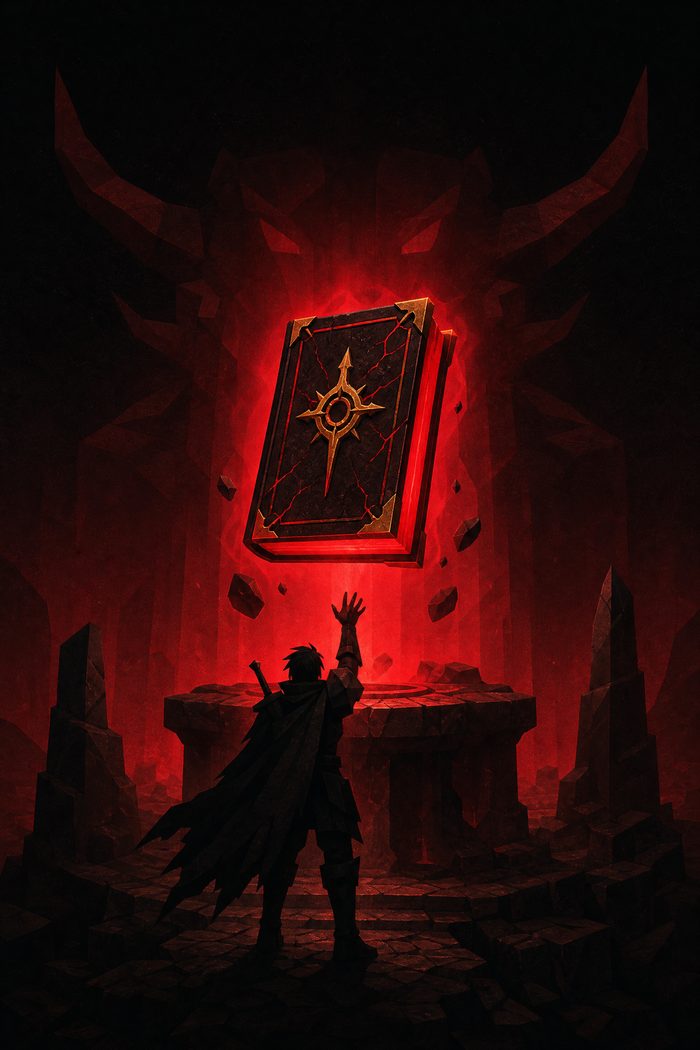
I pulled the Covenant Tome from inside my coat. It was warm. It was always warm, this ancient book that shouldn't exist, this living document that carried the weight of divine will. The leather binding had softened over the years, molded to my grip, but tonight it felt like a brand. A reminder of the burden I hadn't asked for. The burden I couldn't refuse.
Seventeen days.
The last words had appeared on a Thursday. Simple words. The kind that seemed gentle until you understood what they meant: "Rest. Prepare. The quiet will end."
Then nothing.
I opened the book again. I'd checked it forty-three times today. Not that counting mattered. Not that anything mattered except the waiting. The not knowing. The absolute silence where God's voice should be.
The pages were blank. Not empty—blank. There's a difference. Empty pages can be written on. Blank pages are a statement. Blank pages say: Not yet. Not for you. Trust.
Trust.
I closed the Tome and set it on the window ledge. Rain ran down the glass beside it, distorting the golden sun embossing on the cover into something that looked almost like a wound. Like the scar that ran from my left temple to my jaw. The scar from the fall. The fall that took everything.
My phone buzzed. Encrypted channel. Isaiah.
CIPHER: Checked the feeds 3 times. Nothing unusual. No Meridian movement. No Syndicate chatter. It's quiet.
I stared at the message. Quiet. The worst kind of quiet. The kind that comes before the storm. The kind that made my skin itch and my hands shake and my mind run through every scenario where seventeen days of silence meant God had finally given up on me.
ME: Keep watching. The quiet makes me nervous.
CIPHER: Always do. You should sleep. It's 3 AM there.
Sleep. As if sleep was something that came easy. As if I could close my eyes without seeing their faces. The forty-three from my first mission. The twenty-three from missions since. The faces I remembered even when I wished I could forget.
ME: Can't sleep. The silence is too loud.
A pause. Then:
CIPHER: Call Sister Maria. She always knows what to say.
Sister Maria. My trainer. My confessor. The woman who had spent fifteen years teaching me to carry a burden that was never meant for human shoulders. I looked at my phone. 3:17 AM. Too early to call. Too late to pretend everything was fine.
I put the phone down.
I picked the Tome back up.
I opened it again.
Still blank.
Part Two: The Memory of Light
Age 5. Jerusalem. The night everything changed.
The vision came while I was sleeping. One moment I was dreaming of nothing—of the darkness behind closed eyes—and the next I was somewhere else. Somewhere that smelled like smoke and copper. Somewhere that felt wrong in a way I couldn't articulate.
A man stood in a forest. A man in black armor that seemed to drink the light. His sword was drawn. His helmet was off. And his face—
His face was nothing. Not blank. Not scarred. Just nothing. A void where features should be.
He was looking at me.
"You see me," he said. His voice was the sound of churches burning. The sound of prayers unanswered. The sound of everything holy being broken.
I tried to scream but my voice was gone.
"You will see me again," he said. "Little light. Little keeper of faith. We will meet again. And when we do—"
The vision shattered. I woke in my bed, soaked in sweat, my small hands clutching the sheets so hard they'd torn.
Father Matthias was there instantly. My father. My protector. He'd known the moment it started—the way my breathing changed, the way the temperature in the room dropped.
"What did you see?" he asked. Not "are you okay." Not "just a dream." He knew what I saw wasn't a dream. He knew because he'd seen it too. In the texts. In the fragments that his wife—my mother—had been translating for years.
"A man," I whispered. "In black armor. He saw me."
Father Matthias's face went pale. Then careful. Then calm in the way that men become when they're hiding something terrible.
"Describe him," he said. "Everything. Don't leave anything out."
I told him. The armor. The void where his face should be. The sword. The voice. All of it.
When I finished, Father Matthias was silent for a long time. Then he crossed himself—the sign of the faith we followed—and he said: "The texts spoke of this. The Hollow King. The one who fell. The one who would walk when all seemed lost."
"What's a Hollow King, Father?"
"A question," he said. "One I hope you're never asked to answer."
But we both knew he was lying. We both knew that whatever had reached out to touch my mind that night had only been the beginning.
Age 13. Jerusalem. The night everything ended.
I was in the safe room when they came. Father Matthias had built it behind the library, hidden behind a bookshelf that moved on a pivot. Inside: supplies, weapons, a phone that could reach Sister Maria anywhere in the world.
"Lock the door," Father Matthias said. "Don't open it for anyone except me or your mother."
"What's happening?"
"Just do it, Eliyahǝhu. Please."
I didn't argue. I'd learned not to argue when Father Matthias used that tone. The tone that said he was afraid but wouldn't show it. The tone that said he loved me but couldn't hold me. Not now. Not while the danger was real.
The door closed. The bookshelf pivoted back. I sat in the darkness with my hands pressed against the wall and I listened.
First: footsteps. Many of them. Heavy boots on wooden floors.
Second: voices. Hushed. Speaking in a language I didn't recognize. Latin, but wrong somehow. Corrupted.
Third: My mother's voice. "You don't have to do this. Please. He's just a child."
Father Matthias: "She's telling the truth. Take me. Leave them."
Then: screaming. My mother's screaming that cut off too quickly. Father Matthias's voice reciting something—prayer, I realized later—but it ended too. It ended with a sound I still hear when the nightmares come. A wet, final sound.
Then silence.
I stayed in that room for six hours. I didn't cry. I didn't scream. I just sat and listened to my own breathing and the silence that came after.
When Sister Maria found me, she didn't say anything. She just held me. And that was worse. That was so much worse than words.
Later—days later, maybe weeks—I found the letter. In my mother's coat. In her pocket. Stained with something I didn't want to identify.
Eliyahǝhu, my light,
If you're reading this, I'm gone. I know I won't be there when the Covenant chooses you. I know I won't see you become what you were always meant to be. But I need you to understand: everything we've done, everything we've sacrificed, it was worth it. You are worth it.
Don't let the darkness win. Don't let them take what makes you human. The Covenant is a gift, but it's also a curse. God will ask things of you that will break you. And you'll want to stop. You'll want to give up. You'll wonder if any of it matters.
It matters. You matter.
Find Sister Maria. Listen to her. She knows what I couldn't teach you. And when the time comes—when you stand before the darkness and it offers you everything you want—remember this: The light doesn't win because it's strong. It wins because it persists.
I love you, my son. My light. My everything.
Mom
I read that letter so many times the words lost meaning. Then found it again. Then lost it. Then found it one last time.
Now I carry it in my chest. Not the paper—the weight of it. The truth of it.
Don't let the darkness win.
Age 15. Greece. The Monastery of Dawn. The night I was chosen.
Sister Maria had brought me here for my fifteenth birthday. "A gift," she'd said. "Something to prepare you."
The monastery was ancient. Built into the side of a mountain, accessible only by a path that wound through forest for three miles. Inside: monks who never spoke. Weapons that glowed. Texts that burned to touch.
And on the night of my birthday—the anniversary of my parents' death—a book that appeared on my chest while I slept.
I woke to warmth. A warmth that spread through me like sunrise. Like the first moment of dawn breaking over water.
The Covenant Tome.
I'd seen it before, in visions. I knew what it was. Father Clement—the oldest monk, the keeper of knowledge—had told me about Covenant Bearers. About the men and women throughout history who'd received a Tome of Divine Will. About the impossible task of completing God's work when all seemed lost.
"You are the one," Father Clement said. He'd appeared in my doorway, his ancient eyes seeing what the Tome meant. "The latest. But not the last."
I opened the book. The first page.
Golden words, glowing faintly, like embers that would never die:
YOU ARE CHOSEN. YOU WILL BE TESTED. YOU WILL NOT BE COMFORTED. BUT YOU WILL NEVER BE ALONE.
I read it again. And again. And again.
Then I closed the book. I looked at Father Clement. I looked at Sister Maria, who stood behind him, her face a mask of emotions I couldn't read.
"What does it mean?" I asked. "What am I supposed to do?"
"It means," Sister Maria said, her voice breaking, "that you are no longer just a boy. You are a weapon. A shield. A light in the darkness."
"But what does that mean?"
"It means," Father Clement said, "that God has a plan. And you are part of it."
"Will it hurt?"
"Every moment," Sister Maria said. "Every single moment. But you'll survive. Because that's what you do, Eliyahǝhu. You survive."
I looked at the Tome again. At the golden words that seemed to pulse with life. With purpose. With pain.
I was fifteen years old.
I had been chosen.
And I had no idea what that would cost me.
Age 20. Rome. The first mission.
The Tome showed me the name three days before I moved: Cardinal Dominic Ashworth. Vatican City. The children must be protected.
I didn't know what it meant. I asked Sister Maria. She didn't know either. She suggested I pray for clarity.
I prayed. For hours. For days.
The Tome gave me nothing more.
So I went to Rome.
Cardinal Ashworth was a powerful man. Third in line to become Pope. Known for his charitable works. His humanitarian aid programs. His public image of humble servitude.
What the public didn't see: the trafficking ring he ran through the Vatican's humanitarian programs. Forty-three children, ages four to twelve, being shipped to buyers across Europe.
The Tome had shown me the problem.
It hadn't shown me the solution.
I found the first child—the youngest, a girl named Isabella, eight years old—locked in a room beneath a church in Trastevere. She was malnourished. Drugged. Barely conscious.
I held her while I called Sister Maria. While I waited for help that couldn't come fast enough.
"They said the nice man would help us," Isabella whispered. Her voice was hoarse. Her eyes were empty. "They said if we were good, we'd go home."
"Who said, sweetheart?"
"The other children. But they lied. They always lie."
I held her tighter. I made promises I wasn't sure I could keep.
The next forty-eight hours were a blur.
I found the children. All forty-three of them. Hidden in three locations across Rome.
I found the trafficking documents. Names. Dates. Buyers.
I found Cardinal Ashworth in his private chapel, on his knees, praying for forgiveness that would never come.
"You don't understand," he said when I confronted him. His voice was calm. Almost peaceful. "What I did was for the Church. For the greater good. These children—some of them would have died in their home countries. I saved them."
"You sold them."
"I saved them. There's a difference."
"There isn't."
I won't describe what happened next. Some things don't need description. Some things just need to be done.
Cardinal Ashworth died that night. Officially: heart attack. The children were returned to their families. The trafficking ring was dismantled. The Vatican hushed it up.
And I learned: The Covenant doesn't make judgments. It shows me problems. I decide the solutions.
I still see his face sometimes. The moment of recognition. The moment of acceptance.
He knew what he was. He knew what he deserved.
But that didn't make it easier.
That never makes it easier.
Age 25. Barcelona. The first loss.
The Tome disappeared on a Tuesday.
I'd been reckless. Arrogant. I'd thought I understood the Covenant well enough to take risks. To let my guard down.
I was wrong.
The theft happened during a mission in Spain. A simple extraction—a child with prophetic abilities, being hunted by demons. I found her. I saved her. I brought her to Sister Maria's safe house in Barcelona.
And then I went to sleep.
I woke to an empty room and a note written in Latin: "The light fades. The darkness rises. We will meet again, Covenant Bearer."
The Tome was gone.
For six days, I lost my mind.
I couldn't read God's will. I couldn't complete missions. I couldn't do anything except check and recheck every location I could remember visiting.
Sister Maria found me on the sixth day, sitting in a church, staring at my hands. I hadn't eaten. I hadn't slept. I hadn't prayed.
"You have to stop," she said. "This is what they want. This is what demons do—they take what matters and they wait for you to break."
"I can't stop. The Tome is gone. Without it, I'm nothing."
"You're everything. The Tome is a tool. You're the weapon. God chose you, not the book."
"But—"
"What if nothing." Her voice was sharp. Angry. Afraid. "You are Eliyahǝhu Malki'el. You are the Covenant Bearer. You will find the Tome, or you will learn to live without it. But you will not break. Not now. Not ever."
I wanted to argue. I wanted to rage. I wanted to tell her she didn't understand.
But she was right.
The Covenant wasn't about the book. It was about me. About the choice I'd made—implicitly—to answer the call. To carry the burden. To be the light when darkness came.
On the seventh day, I went back to the church where I'd been sleeping.
The Tome was on the altar.
I never let it out of my sight again.
Part Three: The Quiet Before
Budapest. November. The rain stopped sometime around 4 AM. I didn't notice until the silence changed—from the white noise of water hitting glass to the deeper silence of an empty city.
I'd stopped checking the Tome. I was on check forty-seven, then forty-eight, then I just... stopped. Not because I didn't want to know. Because I couldn't bear to see another blank page.
My phone buzzed again. Sister Maria.
SISTER MARIA: Are you awake?
ME: When am I ever asleep?
SISTER MARIA: True. Call me when you're ready to talk. I have news.
ME: What kind of news?
SISTER MARIA: The kind that can't be typed. The kind that changes everything.
I stared at the message. Sister Maria didn't do cryptic. She didn't play games. If she said something would change everything, she meant it.
I called.
She picked up on the first ring. Her voice was older than I remembered—the years catching up, the weight of her own burden showing in the cracks. But her tone was alert. Sharp. The tone she used when danger was real.
"The Vatican is moving against you," she said without preamble. "Cardinal Vermeulen. The Syndicate. They've been planning this for years."
"Since when?"
"Since they realized you wouldn't join them." A pause. "They think the Covenant should be controlled. Managed. They think God needs help with His plan."
"They're insane."
"They're powerful. And they've convinced the wrong people that you're dangerous. That you're unstable. That you're using divine power for personal vendettas."
"Have they told anyone about—"
"Not yet. But they're building a case. Using the Ashworth mission as a starting point. Calling you a vigilante. Saying you've killed twenty-three people in the name of God without Church approval."
"It's not—" I stopped. Because it was. All of it was true. I had killed twenty-three people. I had operated without Church approval. I had used divine power according to my own interpretation.
But I'd also saved hundreds. Thousands, maybe. If you counted the missions where the Covenant showed me threats that never materialized because I stopped them early.
"The Meridian knows too," Sister Maria continued. "Dr. Cross. She's been tracking you for years. She nearly caught you in Prague."
"I knew about the Meridian."
"You knew about the field agents. You don't know about the analyst."
"What analyst?"
"Someone in your network. Someone who's been watching all three. Someone that's seen patterns. Who knows your methods, your timing, your movements."
The words hit me like a physical blow. Someone in my network. Someone I trusted.
"That's impossible. Only three people know my identity. You. Isaiah. Brother Thomas."
"And someone who's been watching all three. Someone who's seen patterns. Who knows your methods, your timing, your movements."
I closed my eyes. The weight of it—the betrayal, the violation—settled into my chest like lead.
"Who?"
"I don't know. But they're good. Better than anyone I've seen. Whatever organization is running them has resources. Patience. Purpose."
"What do we do?"
"We disappear. Both of us. I have a location—off-grid, secure. We can regroup. Figure out our next move."
"For how long?"
"For as long as it takes. Or until they find us. Whichever comes first."
The line was quiet for a moment. I could hear her breathing. Could hear the background noise of whatever safe house she was in. The wind. The creaking of old walls.
"Elijah," she said, using my English name. The name I used when I needed to feel human. "There's something else."
"There's always something else."
"The Hollow King. Abaddon. He's moving."
My blood went cold. The name I'd been dreading. The name from my first vision, twenty-five years ago.
"Moving how?"
"Possessions. In Europe. In the Americas. Everywhere. Demons entering vessels at an unprecedented rate. Something is preparing."
"Preparing for what?"
"I don't know. But Father Clement—before he died—he told me something. About the Covenant. About the final battle. About the moment when light and darkness would collide."
"What did he say?"
"He said: 'When the Covenant Bearer faces the Hollow King, everything changes. The old war ends. A new one begins.'"
"And what does that mean?"
"It means you're not just fighting the Syndicate and The Meridian. You're fighting for something bigger. Something that's been coming for a long time."
"How long?"
"Since before you were born. Since before I was born. Since before the first Covenant Bearer received the first Tome."
"Then what chance do I have?"
Sister Maria was quiet for a long moment. Then:
"The same chance every light has ever had. You persist. You burn. You don't go out."
The words settled into me. I wanted to argue. I wanted to rage. I wanted to tell her she didn't understand what it felt like to carry this weight, to see these faces, to make these choices.
But she did understand. Better than anyone.
"When do we meet?" I asked.
"Tomorrow night. I'll send coordinates. Bring the Tome. Bring the weapons. Bring everything."
"Everything?"
"Everything you are, Elijah. Everything you've become. Because tomorrow, everything changes."
Part Four: The First Light
I hung up the phone.
I looked at the Tome.
I picked it up.
I opened it.
For a moment—just a moment—I was afraid to look. Afraid that seventeen days of silence had become permanent. That God had finally given up on me. That the Covenant was broken.
But I looked anyway.
And for the first time in seventeen days, new words glowed on the page:
TIME COMES. THE HOLLOW KING STIRS. THE COVENANT WILL BE TESTED.
I read it again. And again. And again.
The words didn't change. They didn't clarify. They didn't tell me what to do or how to do it or when the moment would come.
But they told me this: I wasn't alone.
God was still there. Still watching. Still guiding.
Even in the silence.
Even in the doubt.
Even in the fear.
I closed the Tome. I stood up. I walked to the window and looked out at the city that was just beginning to wake. The rain had stopped. The clouds were breaking. And in the east—a sliver of light, growing brighter with every passing second—the sun was rising.
Dawn.
I thought about Isabella—the girl from my first mission, now nineteen, studying to become a doctor in Vienna. I thought about the forty-two other children I'd saved. I thought about the missions I'd completed, the threats I'd stopped, the lives I'd touched.
I thought about my parents. About the sacrifice they'd made. About the letter my mother wrote. About the weight she knew I'd carry.
Don't let the darkness win.
I pulled on my coat. I checked the Dawn Blade—still in its sheath, still warm, still waiting. I checked Lux Cordis—the five golden throwing knives, each one returning when called, each one a prayer made manifest.
I checked the Tome one more time. The words were still there. Still glowing. Still promising.
TIME COMES. THE HOLLOW KING STIRS. THE COVENANT WILL BE TESTED.
I sat down at the window. I opened my prayer book—the small, worn book of verses that Father Matthias had given me when I was seven. I turned to Psalms.
Yea, though I walk through the valley of the shadow of death, I will fear no evil: for thou art with me; thy rod and thy staff they comfort me.
I prayed. Not for strength. Not for victory. Not even for clarity.
I prayed for the courage to do what came next.
The courage to face whatever waited.
The courage to be the light.
When I finished, the sun had fully risen. The city was awake. And somewhere out there—in the Vatican, in The Meridian's headquarters, in the darkness where the Hollow King waited—enemies were moving.
But I was moving too.
I picked up my phone. I typed a message to Isaiah:
ME: Change of plans. Meet coordinates tomorrow. Full kit. Full loadout.
CIPHER: What's happening?
ME: Everything.
CIPHER: That bad?
ME: That good. We're finally getting answers.
CIPHER: You mean answers to the questions we don't know to ask.
ME: Something like that.
I put the phone down.
I looked at the Tome one more time.
Then I started to pack.
Tomorrow, I would meet Sister Maria.
Tomorrow, I would learn what the Hollow King's stirring meant.
Tomorrow, everything would change.
But tonight—tonight I had one more night of silence. One more night of waiting. One more night to prepare.
I opened the window. The cold air hit my face. The smell of rain and concrete and a city waking up filled my lungs.
Somewhere in the distance, a church bell rang.
I closed my eyes.
I prayed.
And in the silence before the storm, I felt—for the first time in seventeen days—something like hope.
END OF PROLOGUE
EPISODE ONE: THE COVENANT
Part One: The Weight of Purpose
The coordinates led to a monastery in the Swiss Alps.
I arrived at dusk, the helicopter dropping me on a snow-covered plateau that seemed to exist outside of time. The air was thin and cold, sharp enough to cut. My breath came out in clouds that dissipated almost instantly.
The Monastery of Dawn—Father Clement had told me about it when I was seventeen. A place where the first Covenant Bearer had trained. A place where weapons against darkness had been forged. A place that existed in no records, on no maps, accessible only to those who knew it was there.
And now, according to Sister Maria, the key Father Torres had given me before he died would open its doors.
I touched the key in my pocket. Small. Cold. Made of metal that seemed to absorb light rather than reflect it. Father Torres had pressed it into my hand as he was dying, his blood mixing with the silver.
"Find the monastery," he'd whispered. "The weapon of first light. It's been waiting."
"For how long?"
"For you."
He died before I could ask more.
Now, three weeks later, I stood at the entrance to a place that should have been impossible. The monastery rose from the mountainside like it had grown there—grey stone walls weathered by centuries, windows that reflected the dying sun, doors that seemed to guard something more than secrets.
I climbed the path. Each step felt heavier than the last. Not from the snow. Not from the altitude. From the weight of what waited inside. From the knowledge that whatever I found here would change everything.
The doors were massive. Twenty feet tall, carved from wood that had never existed in nature. And on them, a symbol: a sun rising over a cross, but the cross was incomplete—the vertical beam extended upward infinitely, becoming a pillar of light.
I took out the key.
I touched it to the door.
It began to glow.
The doors opened.
And I stepped into darkness.
The interior was cold. Colder than outside. Cold in a way that had nothing to do with temperature.
Light appeared—small flames that seemed to ignite from nothing, floating in the air like fireflies. They lined the corridor ahead, creating a path through the darkness.
I followed.
The walls were covered in murals. Scenes from the Bible, but different. Modified. I saw Noah's Ark, but in the water surrounding it were shapes that weren't sharks. I saw the parting of the Red Sea, but in the retreating waters stood figures that weren't Egyptians. I saw the crucifixion, but behind Christ on the cross was a shadow that was larger than any shadow should be.
"The murals are warnings," a voice said.
I spun, hand going to the Dawn Blade. But there was no one there. Just the voice—old, tired, echoing from everywhere and nowhere.
"Who's there?"
"The monastery remembers. The monastery speaks. You are not the first to come seeking weapons."
"Then you know why I'm here."
"I know why everyone comes here. They come because they believe they need power. Strength. The ability to fight what fights them."
"Do I?"
A pause. Then: "You already have what you need, Covenant Bearer. The Tome. The weapons. The training. What you lack is not power. You lack understanding."
"Then help me understand."
"Walk the path. See the truth. And when you reach the end—when you understand what waits—you will know what must be done."
The flames moved. Changing direction. Leading me deeper into the monastery.
I followed.
The first chamber I entered was a library.
Books lined every wall—thousands of them, maybe tens of thousands. Some looked ancient, bound in leather that crumbled at the touch. Others looked modern, their spines still crisp.
"The history of the Covenant," the voice explained. "Every Bearer. Every mission. Every victory. Every loss."
"Every loss?"
"Including yours. Eventually."
I walked among the shelves. My hand brushed spines. Some felt warm. Others cold. A few seemed to flinch at my touch.
"Why are you showing me this?"
"Because knowledge is power. Because you must understand what came before to know what comes after."
"But I don't have time for—"
"You have exactly the time you need. The Covenant provides. Even when it doesn't feel like it."
I stopped in front of a shelf. A single book sat there, separate from the others. Its spine was blank—no title, no author, nothing.
"What's this?"
"The Book of Failures. Every mission that went wrong. Every Bearer who died. Every moment when light seemed to lose."
"And why is it separate?"
"Because these stories must be remembered. Not glorified. Not hidden. Remembered. The Covenant is not a fairy tale, Bearer. It's a war. And in every war, there are defeats."
I reached for the book.
"Don't."
I stopped. "Why not?"
"Because you carry enough weight. You don't need to add theirs."
"I'm supposed to learn from the past."
"You're supposed to learn from the present. From your own experiences. From the choices you make. The failures of others can teach you nothing except fear. And fear is a weapon your enemies will use against you."
I let my hand fall.
"What do you suggest I read?"
"The history of your lineage. Know who came before. Know their methods, their successes, their victories. But don't dwell on their defeats. Those are already written. Focus on the unwritten pages. The story you're creating right now."
I turned away from the Book of Failures.
I found the section marked "The Bearer Lineage."
And I began to read.
The first Covenant Bearer was a man named Lazarus.
Born in Jerusalem, 33 AD. Present at the crucifixion. Witness to the resurrection.
When Jesus rose, Lazarus was the first to truly understand what it meant. The power of faith. The reality of divine purpose. The weight of being chosen.
He received the first Tome on the day of Pentecost, when the Holy Spirit descended and tongues of fire appeared over the heads of the disciples.
For forty years, he served. He healed. He fought. He protected the early Church from persecution, from demonic attack, from the darkness that sought to end the faith before it could get root.
He died in 73 AD, martyred for refusing to recant his beliefs.
But his Tome did not die. It passed to another. And another. And another.
For two thousand years, there had always been a Covenant Bearer. One to walk in the light. One to fight the darkness. One to carry the burden when all seemed lost.
And now, for the first time, I understood what that meant.
I wasn't just part of a lineage.
I was the continuation of a war.
Part Two: The Weapon of First Light
The flames led me deeper. Through chambers filled with weapons I didn't recognize—blades that seemed to hum with prayer, shields that bore the weight of centuries, armor that looked too light to offer protection but felt too heavy to wear.
"Each weapon is a prayer," the voice explained. "Each prayer is a weapon. They were forged by Bearers who came before. Each one carries the faith of those who used them."
"And the Dawn Blade?"
"The Dawn Blade is the oldest. Forged by Lazarus himself, using metal from the temple that was destroyed. Blessed by apostles who prayed over it for forty days and forty nights."
"But it's not here."
"No. It found you. Long before you knew you would need it. The weapon chooses the Bearer, not the other way around."
"But if it's not here, why did the key lead me to this place?"
"Because there are other weapons. Weapons you don't know about. Weapons you will need."
The flames stopped in front of a door that looked like all the others—grey stone, ancient wood, carved with symbols I couldn't read.
"Beyond this door is the Armory of First Light. The place where weapons against the darkness are stored. Not for you—not all of them. But for the battles to come."
"What kind of battles?"
"The kind you can't yet imagine. The kind that have been preparing for two thousand years."
"Will I survive them?"
A long pause.
Then: "The question is not whether you will survive. The question is what you will become in surviving."
"That's not an answer."
"There are no answers. Not yet. Only paths. And you must choose which one to walk."
The door began to open.
Light spilled out—not firelight, but something brighter. Cleaner. Light that seemed to come from the light itself.
I stepped through.
The Armory of First Light was smaller than I'd expected. Circular, maybe fifty feet in diameter, the ceiling lost in shadow above.
But the weapons.
Mounted on the walls, displayed on pedestals, resting in cases that seemed to be made of light itself: weapons that defied description.
I saw a spear that wept. Tears of what might have been gold, sliding down the metal and evaporating before they hit the ground.
I saw a bow that sang. A low, constant hum that resonated in my chest and made my heart beat in time.
I saw a shield that reflected not the room, but something else—faces, maybe. People I'd never met, smiling, reaching, welcoming.
And in the center of the room, on a pedestal of white marble: a sword.
Not like the Dawn Blade. Not the weapon I'd carried for ten years. Something different. Older. More... complete.
"The Sword of Eternal Light," the voice said. "Forged after the death of the third Bearer. Lost for eight hundred years. Found again three centuries ago."
"Why is it here?"
"Because it was waiting."
"Waiting for what?"
"For you."
I stepped toward the sword. My hand reached out, trembling.
"Don't."
I stopped.
"Touch it, and you will understand. But understanding is not always a gift. Sometimes it's a burden."
"Like the Covenant."
"Exactly like the Covenant."
I withdrew my hand. "Then what am I supposed to do with it?"
"Leave it. For now. When the time comes—when you face what waits beyond these walls—you will know what to do."
"And until then?"
"Until then, you train. You prepare. You trust."
"Trust in what?"
"In God. In yourself. In the path He has laid before you."
"And if I fail?"
"Then others will rise. Others will carry what you could not. The Covenant is eternal. Bearers are temporary. The light persists."
I looked at the Sword of Eternal Light. At the pedestal that held it. At the chamber that contained it.
I wanted to take it. To wield that kind of power. To know that when the final battle came, I would have every advantage.
But I also knew: the Covenant had never been about power. It had been about faith. About trust. About accepting the burden even when—especially when—it was too heavy to carry.
"I'll come back for it," I said.
"Perhaps. Perhaps not. The future is unwritten."
"Will I know when it's time?"
"You will know. Because you will have no other choice."
The flames at the door flickered. Signaling. The tour was ending.
"One more thing, Bearer."
"What?"
"The one who betrayed you. The spy in your network."
I tensed. "What about them?"
"They are closer than you think. Closer than Sister Maria. Closer than Isaiah. They have been watching for years. Waiting for the moment when your guard was down. When the Covenant was vulnerable."
"Who is it?"
"I cannot say. The future is unwritten. But this I can tell you: When the moment comes, you will have a choice. To destroy them. To save them. To ignore them. Each path leads somewhere different."
"How do I know which is right?"
"You don't. Not until you've walked it. That's what faith means, Bearer. Not knowing. Trusting anyway."
I closed my eyes. The weight of it—another burden, another mystery, another piece of a puzzle I couldn't see—settled onto my shoulders.
The flames led me out.
The doors closed behind me.
And I stood alone in the corridor, surrounded by murals of warnings, carrying secrets I didn't understand.
Part Three: The Road to Rome
Three days later, I was in Rome.
The coordinates Sister Maria had sent led to a safe house in the Gianicolo district—a neighborhood of old buildings and narrow streets, far from the tourist areas, far from the eyes of the Vatican.
I arrived at midnight.
The safe house was a converted monastery itself—four floors of ancient stone, with a courtyard in the center where Sister Maria had set up a small garden. Herbs, mostly. Things that could be used for medicine, for cooking, for prayer.
She was waiting for me on the roof.
"Eighty years old and she still climbs to the roof at midnight," I said.
"Eighty years old and you still think you can sneak up on me," she replied without turning.
I joined her at the edge. The city spread out below—lights marking the streets, the distant glow of St. Peter's Basilica, the darkness of the Tiber as it wound through the eternal city.
"You went to the monastery," she said. It wasn't a question.
"I went. I saw the Armory. I saw the Sword of Eternal Light."
"And you didn't take it."
"No."
"Why not?"
I was quiet for a moment. Thinking about the voice. About the weapon that waited. About the choice that wasn't really a choice.
"Because it's not time yet. Because taking it would be about fear, not faith. Because when the moment comes—when I truly need it—I'll know."
Sister Maria turned to look at me. Her eyes were old—seventy-eight years of carrying her own burdens—but sharp. Always sharp.
"You're learning," she said. "Finally."
"What did you learn about the spy?"
The question hung in the air. Sister Maria's expression didn't change.
"The voice told you."
"It told me there was a spy. Someone in my network. Someone who's been watching."
"It's true."
"You know who it is?"
"I have suspicions. But suspicions aren't proof. And without proof, accusing someone of betrayal could destroy everything we've built."
"Could destroy everything we've built," I repeated. "Or could save it."
"Not if I'm wrong. Not if the accusations are wrong."
"Then who do you suspect?"
Sister Maria looked away. Back at the city. At the lights that marked the lives of millions of people who would never know how close they came to destruction. How close they still were.
"Isaiah," she said finally.
The name hit me like a physical blow. Isaiah. The hacker who'd saved my life a dozen times. Who'd given up everything to join the mission. Whose daughter I'd saved from a demon possession three years ago.
"Isaiah is the spy?"
"I don't know. I suspect. The patterns fit. The access he has fits. But I could be wrong."
"But you think he's being used."
"Or I think he's been compromised. Recruited. Manipulated. Something. The Meridian is good at finding leverage. And Isaiah has one weakness."
"His daughter."
"His daughter. If they threatened her—if they promised to hurt her unless he cooperated—"
"He would do anything."
"He would do anything."
I closed my eyes. The weight of it—the betrayal, the violation, the impossible choice that was coming—settled into my chest.
"What do I do?"
"Nothing. Not yet. We watch. We wait. We gather evidence."
"And if we can't?"
"Then when the moment comes, you choose. Trust or suspicion. Mercy or justice. Hope or fear."
"You make it sound simple."
"It's not simple. It's impossible. That's why you're the Bearer and not someone else."
The silence stretched between us. Two people on a rooftop in Rome, carrying the weight of a war that most of the world would never see.
"The missions," I said finally. "The Covenant has been silent for seventeen days. Then words appeared. 'Time comes. The Hollow King stirs. The Covenant will be tested.'"
"What do you think it means?"
"I think it means Abaddon is moving. I think it means the final battle is coming. And I think—" I hesitated. "I think I'm not ready."
"You're never ready. None of us ever are. You just do it anyway."
"That's not comforting."
"It wasn't meant to be. It was meant to be true."
The bells of a distant church rang midnight. The sound echoed across the city, a reminder of the faith that sustained millions. The faith that I was supposed to protect.
"Sister Maria."
"Yes?"
"What happens if I fail?"
She was quiet for a long time. Then:
"Then the Covenant passes to another. And we all—everyone who's ever believed in the light—we start over. Again."
"That's it? We just... start over?"
"What did you expect? Victory? Peace? An ending where everyone claps and goes home?"
"I expected... I don't know. Something more."
"There's nothing more. There's just the fight. The choosing. The carrying of the weight. And when you can't carry it anymore, you pass it to someone who can."
"That's not hope. That's despair."
"No, child. That's reality. Hope is believing that carrying the weight matters. That the fight is worth fighting. That even if you fail, the effort counted for something."
I looked at her. At the lines on her face. At the strength in her eyes.
"How do you do it?" I asked. "How do you keep believing when—"
"When what? When everything seems pointless? When the darkness wins more than it loses? When the sacrifice seems too great for the reward?" She shook her head. "I keep believing because I have no other choice. Because giving up would mean everything was for nothing. And I'm not ready to accept that."
"Even if it's true?"
"Especially if it's true. Because then my belief is a choice. A defiant one. A human one."
She reached out. Touched my shoulder. Her hand was old but still strong.
"You will face the Hollow King, Elijah. Not today. Not tomorrow. But someday. And when you do, you will understand what it means to be the light. What it means to persist. What it means to choose faith when everything—everything—tells you not to."
"And if I can't?"
"Then you die trying. And that's enough. It's always been enough."
She turned away. Started toward the stairs.
"Come," she said. "There's food. Tea. Things that remind you you're human. Tomorrow, we plan. Tonight, you rest."
I followed her down.
And for the first time in weeks, I slept without dreaming.
Part Four: The Beginning
Dawn came slowly.
I woke to the smell of coffee and the sound of Sister Maria's voice—she was on the phone, speaking in rapid Spanish, her tone urgent.
I listened from the doorway.
"—confirmed. Three days ago. The Meridian is moving faster than we thought. And the Syndicate—their operatives are already in Rome. Looking for—"
She saw me. Stopped. Covered the phone.
"Isaiah," she said. "He's been captured."
The world went cold.
"Where?"
"Vienna. The Meridian took him from his apartment. His daughter—"
"Is she safe?"
"Unknown. They were together when they took him. Either she's a hostage or—"
"Or they've taken her too."
"We need to move. Now."
I was already reaching for my coat. For the Dawn Blade. For the Tome.
"What does the Covenant say?" Sister Maria asked. "What does the Tome show?"
I opened it. Read the words that appeared as if by magic, written in light:
"ISAIAH CHEN. THE KEY. FIND THE DAUGHTER. THE TRUTH LIES BENEATH."
I closed the book.
"Find the daughter," I said. "The truth lies beneath."
"Beneath what?"
"I don't know. But that's what we have to find out."
Sister Maria hung up the phone. Looked at me.
"This is a trap," she said. "The Meridian knows you're coming. They're using Isaiah as bait."
"I know."
"And you're going anyway."
"I have to. He's in my network. He's under my protection. If I abandon him—"
"If you go, they might kill you both. And then the Covenant falls to someone else. And everything we've built—"
"Will fall anyway. If I don't act. If I don't prove that the light protects its own."
The silence stretched.
Then Sister Maria nodded.
"Then we go together. And we trust in what comes."
"Together."
"And Elijah?"
"Yes?"
"If this is the end—if everything ends here—"
"It won't."
"But if it is—"
I looked at her. At the woman who'd raised me when my parents died. Who'd trained me when I was too young to understand. Who'd carried this burden alongside me even when she could have walked away.
"If it ends," I said, "I'm glad it's with you."
She smiled. Old and tired and beautiful.
"Good," she said. "Now let's go save a hacker and find out what truth lies beneath."
END OF EPISODE ONE
TO BE CONTINUED...